
TKM College of Engineering, Class of 1996
The Teacher and the Mountain
Nature lessons in the forest, ledge trails with exposure, and a night so cold it redefined discomfort
Tadapani → Dobato
Weather: Clear morning, getting noticeably colder at altitude
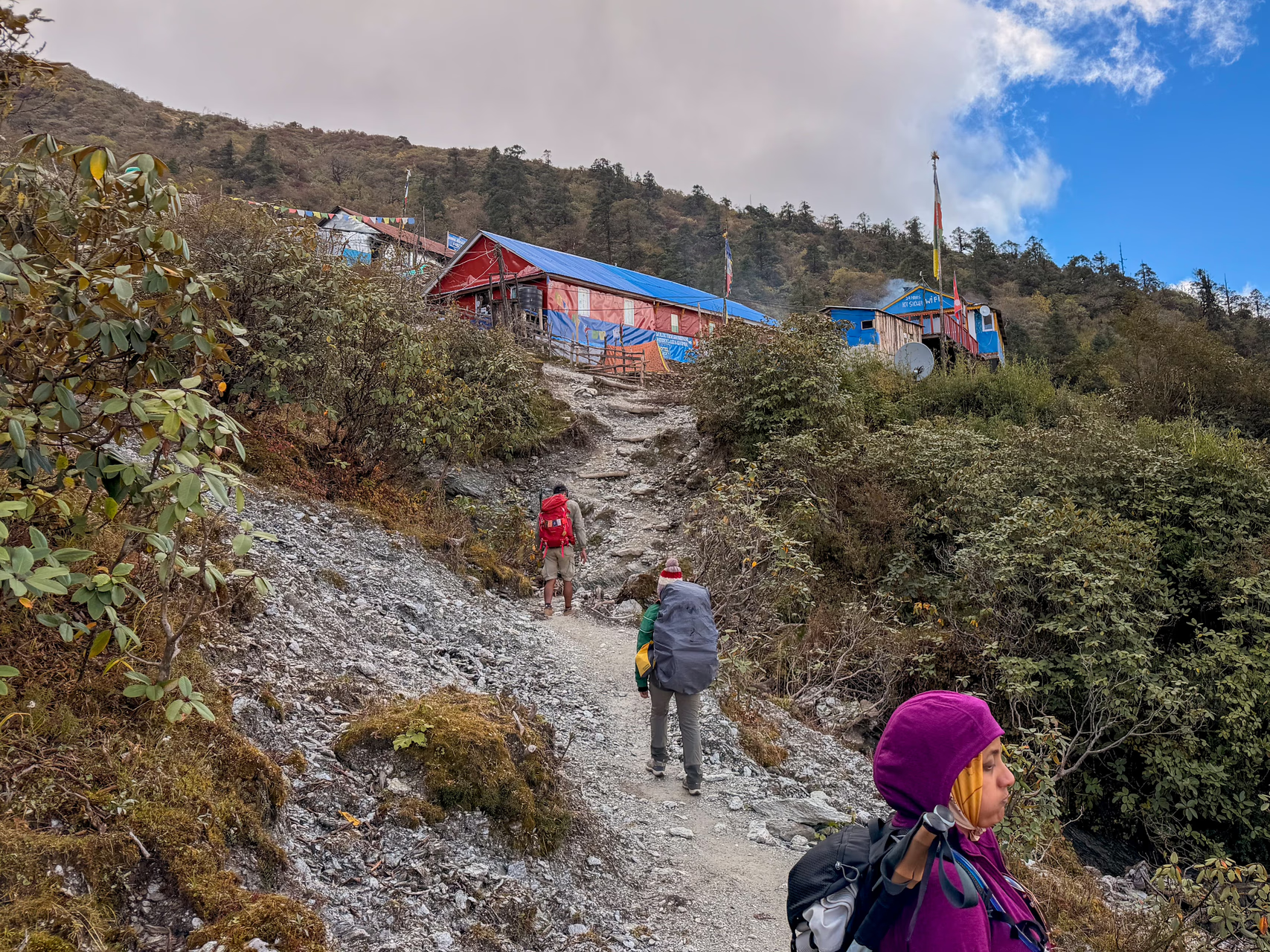 Approaching Dobato at 3,350m—where every breath required a little more effort
Day 4: Oct 11th - When the Mountain Started Teaching
Some days you walk through mountains. Other days, the mountains walk you through their curriculum. This was the latter.
Sunrise Redux
Woke early again and sat outside the Tadapani teahouse watching the same mountains—Annapurna and Machapuchare—paint themselves gold under the rising sun. Same peaks as yesterday, different angle. The light changes everything.
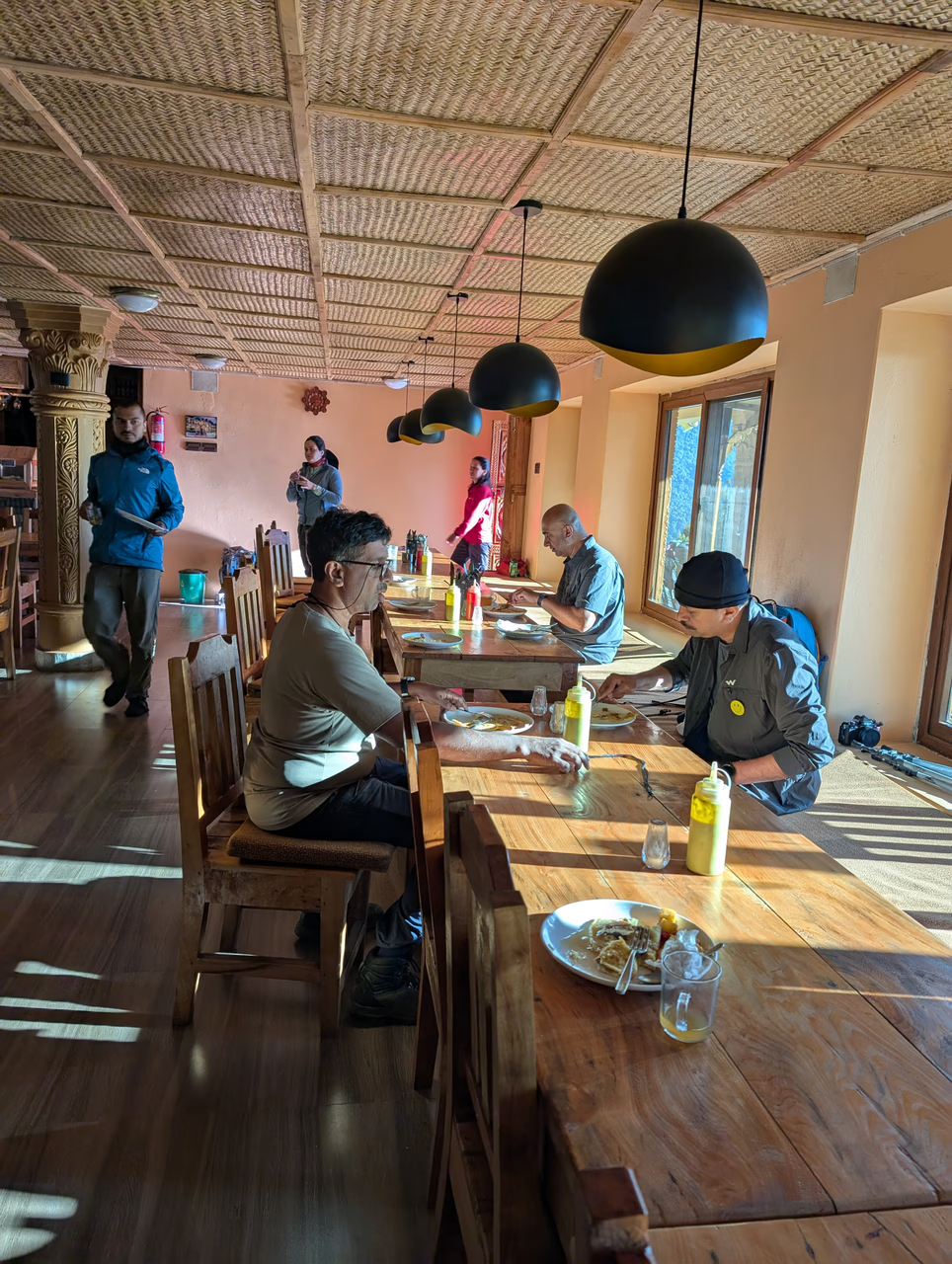 Simon and I at breakfast—fueling up for what would be a long day
There’s something meditative about watching mountains catch the light. They don’t hurry. They don’t perform. They just are, and the sun finds them when it’s ready.
The Bottles-Up Warmup
After breakfast, we assembled for the day’s departure. For once, everyone was on time. Praveen, perhaps surprised by this uncharacteristic punctuality, decided we deserved a reward in the form of a game.
“Bottles-up,” he called it.
The rules were simple: stand in line, place a water bottle between each pair of trekkers, then respond to commands. “Knees!” “Ankles!” “Hop!” And when he shouted “Bottles!”—grab for it. First one to grab it wins the point.
It was ridiculous. It was fun. It was exactly the kind of thing you need before spending eight hours climbing through rhododendron forest.
The Forest as Classroom
We entered the forest shortly after leaving Tadapani, and that’s when Praveen transitioned from trek leader to teacher. He’d been dropping knowledge all along, but today he was in full pedagogy mode.
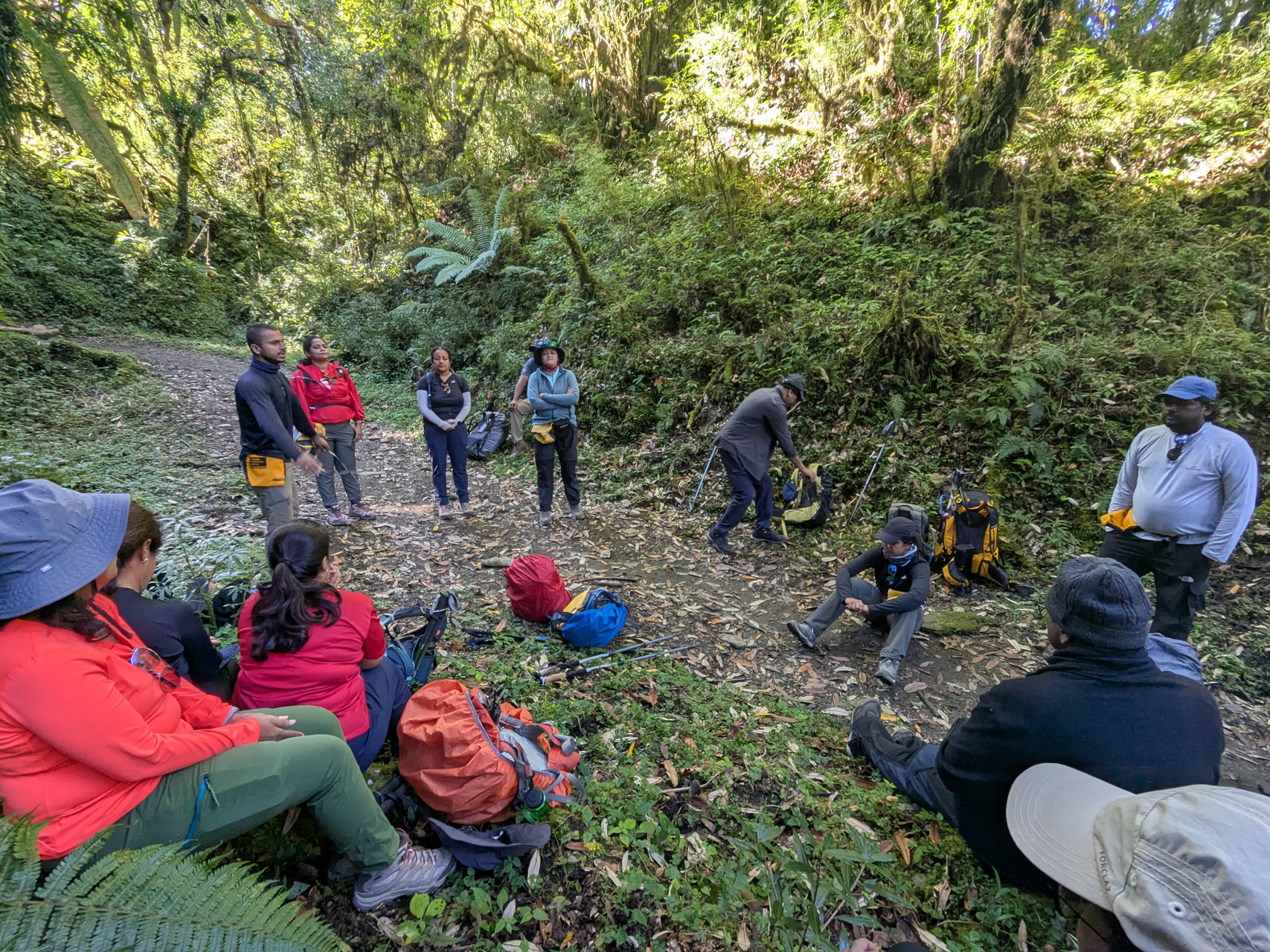 Praveen teaching us to read the forest—ecology lessons at 2,700 meters
The rhododendron lesson stuck with me: at lower elevations, they grow tall as trees. As you climb, they shrink progressively shorter—the altitude compressing them like the atmosphere compressing us. The mountain shapes everything that tries to live on it.
He pointed out three types of oaks—green, brown, and silver. Showed us lichen clinging to bark, explaining it’s not one organism but two: fungi and algae in symbiotic partnership. Nature’s collaboration. The mountains are full of these small arrangements.
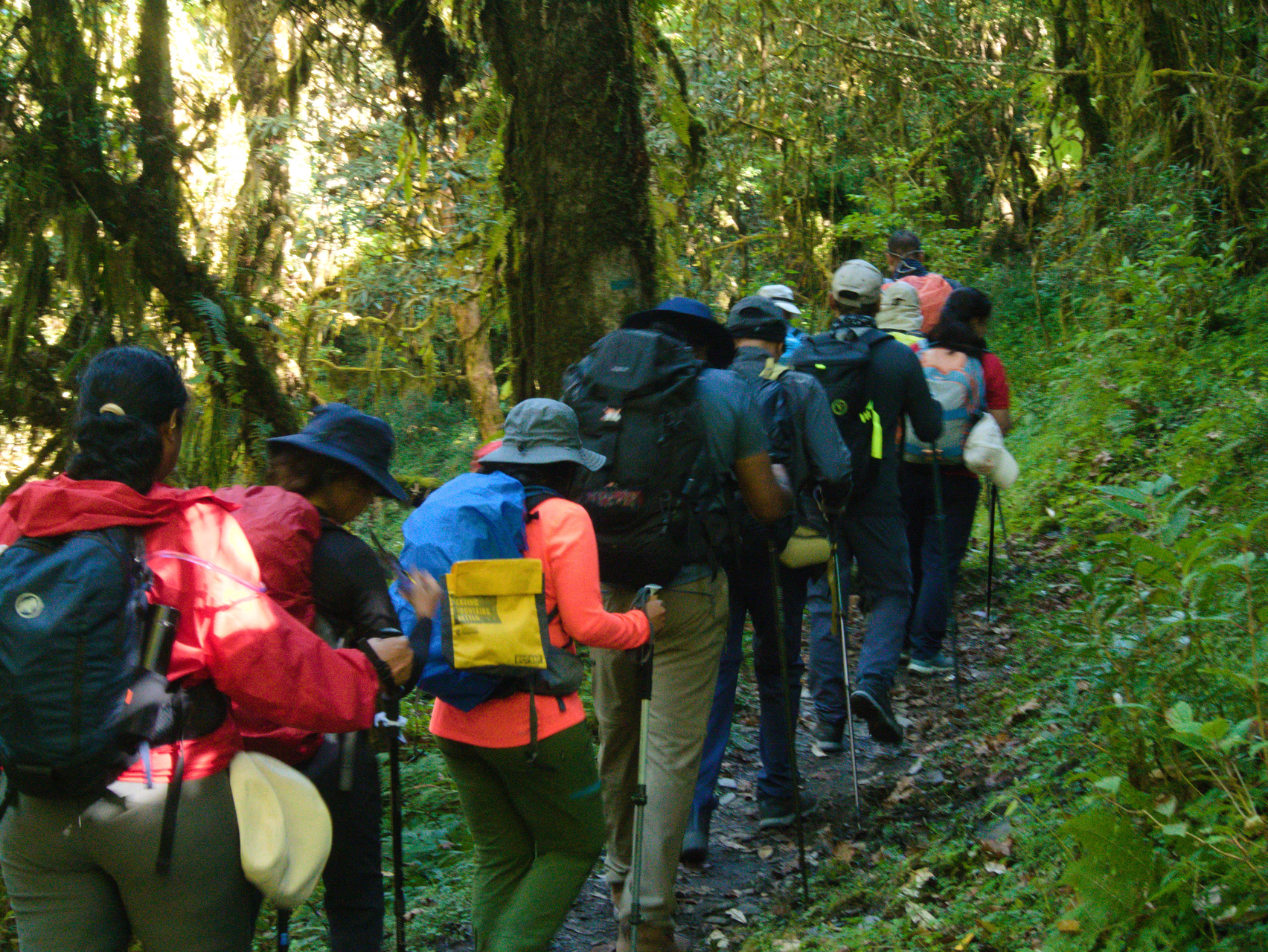 The trail through deep rhododendron forest—moss, mystery, and elevation
The trail wound through sections so green they felt primordial. Moss everywhere. Trees draped in it. Rocks covered in it. The kind of forest that makes you understand why people believe in old gods.
Terrain Lessons
As we climbed, the landscape demonstrated its range. Terraced farms gave way gradually to wilder vegetation. The practical geometry of agriculture yielding to the chaos of high-altitude ecology.
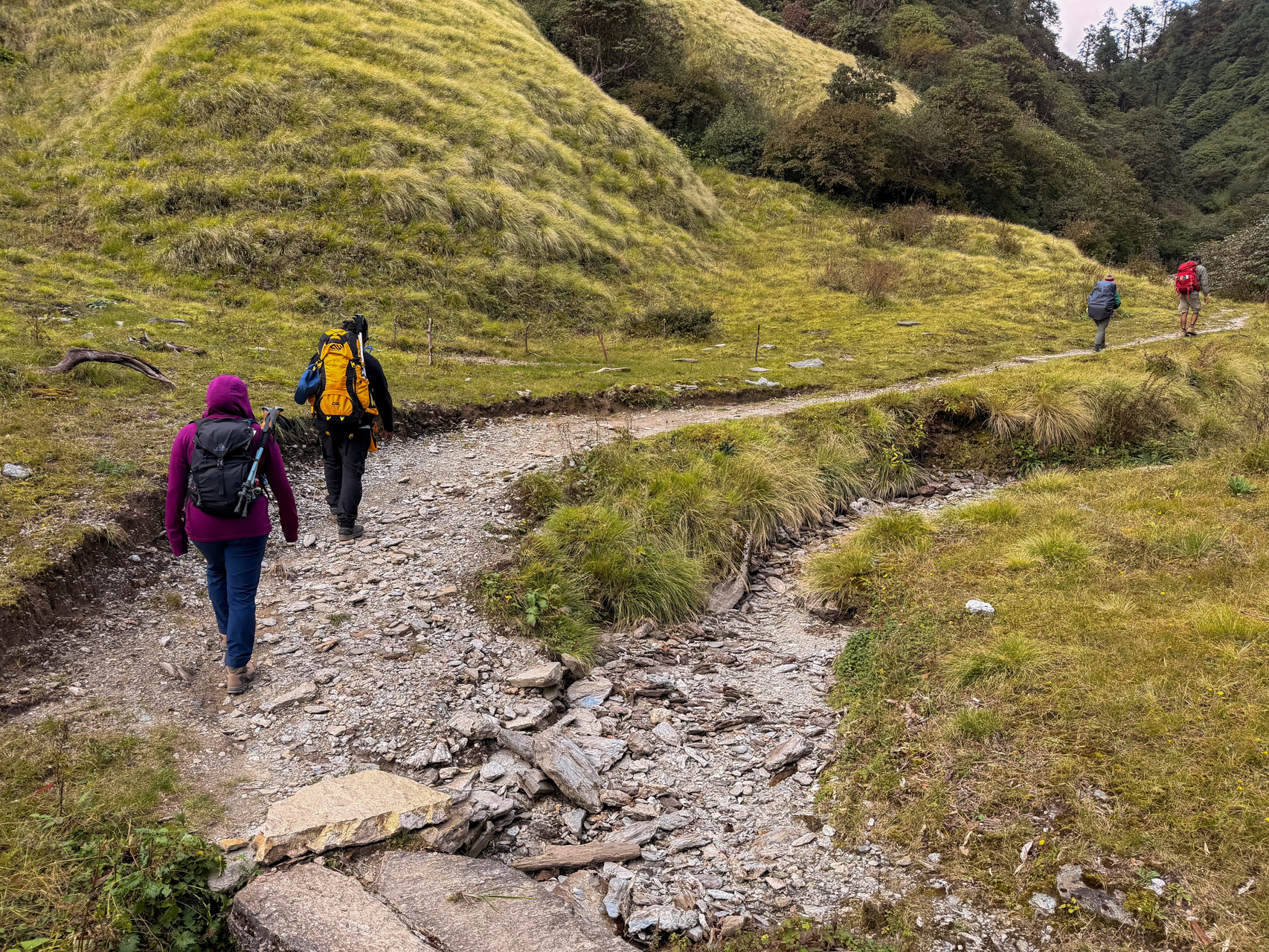 Where cultivation ends and wilderness begins—the transition zone
We passed farm sections tucked into unlikely places. Evidence of human persistence. People making life work in places that seem to resist it.
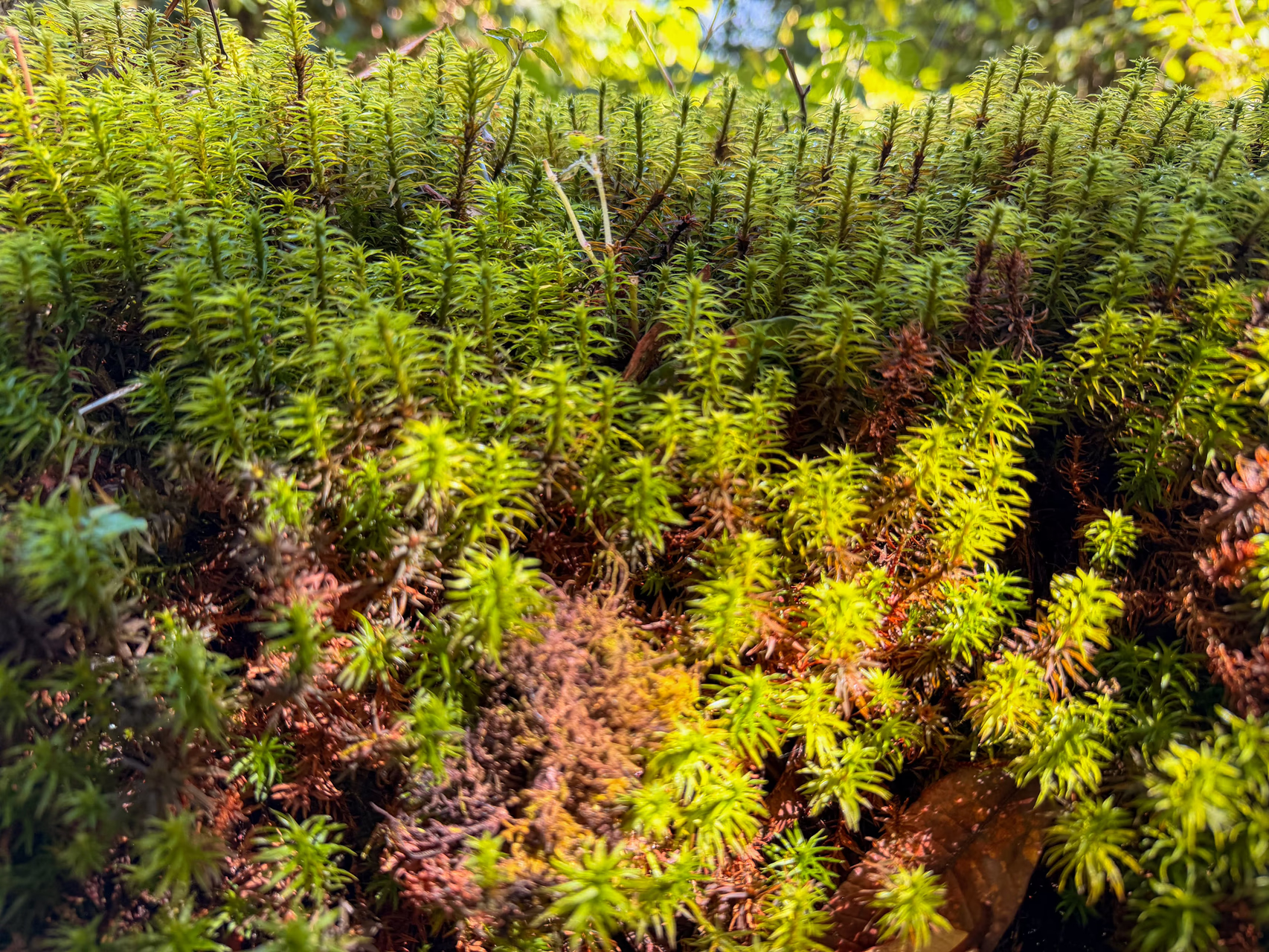 Farm encounters of the botanical kind—cultivated patches in wild places
The Ponies
Mid-morning, two ponies appeared on the trail above us, descending at the particular speed ponies use when they know the route better than their riders.
One carried a young boy. The other was riderless and clearly didn’t care about maintaining formation. It bolted past us, hooves clattering on stone, the kind of freedom that comes from not having passengers.
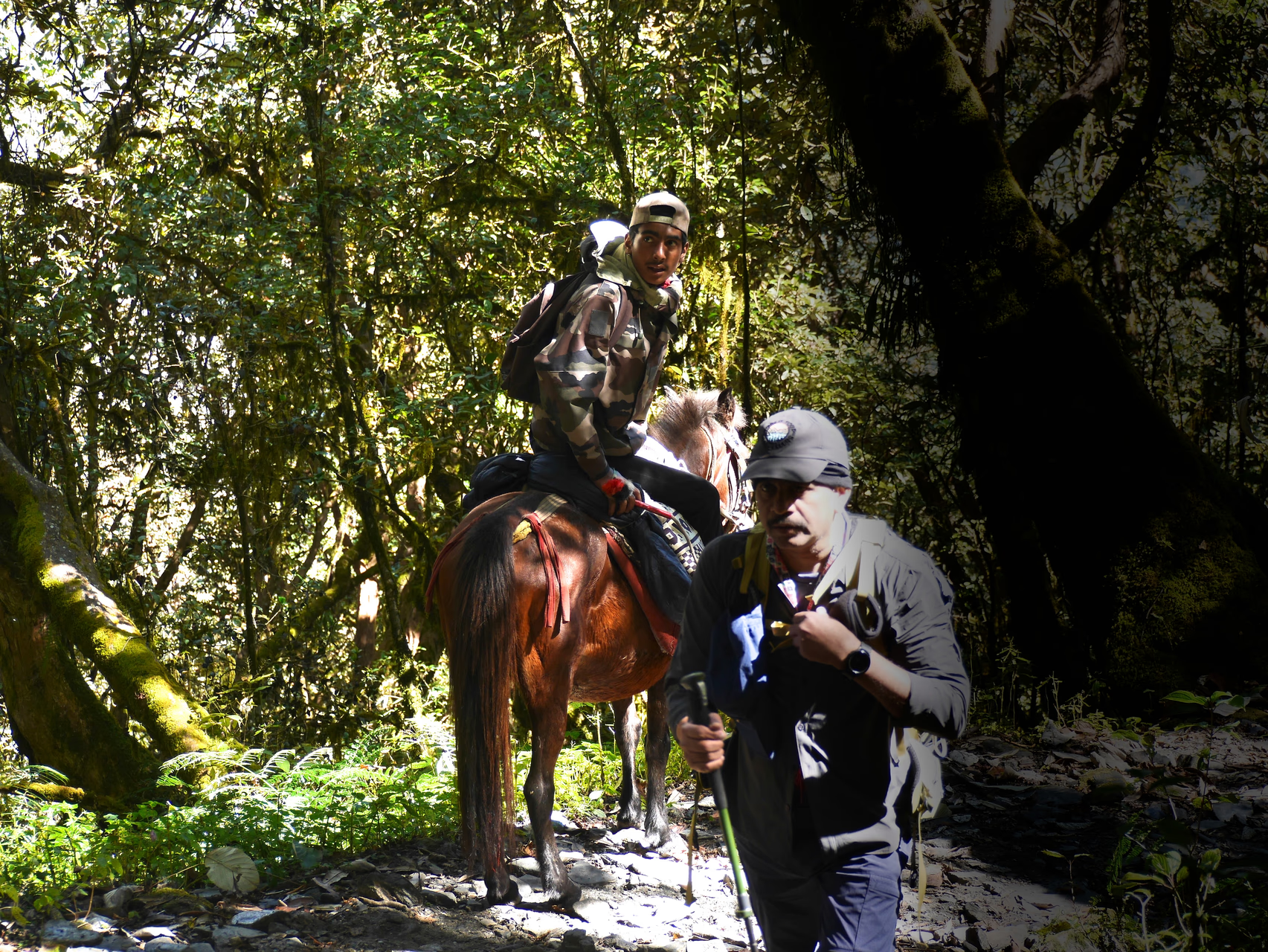 Simon stepping aside for the mountain’s traffic—two ponies with places to be
We pressed ourselves against the trail edge to let them pass. Trail etiquette: downhill traffic has right of way. Gravity gives them momentum. Courtesy gives them space.
Tea at Meshra
By noon, we reached Meshra Tea House. The views opened up—mountains appearing in frames between clouds. We had tea and light snacks. No proper meal yet, just the kind of break that reminds your body it’s doing work and needs calories.
The conversation stayed light. Energy preservation mode. When you’re four hours into an eight-hour day, you learn to ration enthusiasm.
The Climb to Isharu
After tea, the trail got serious about altitude. The section to Isharu was steep—the kind of climb where your calves start composing resignation letters.
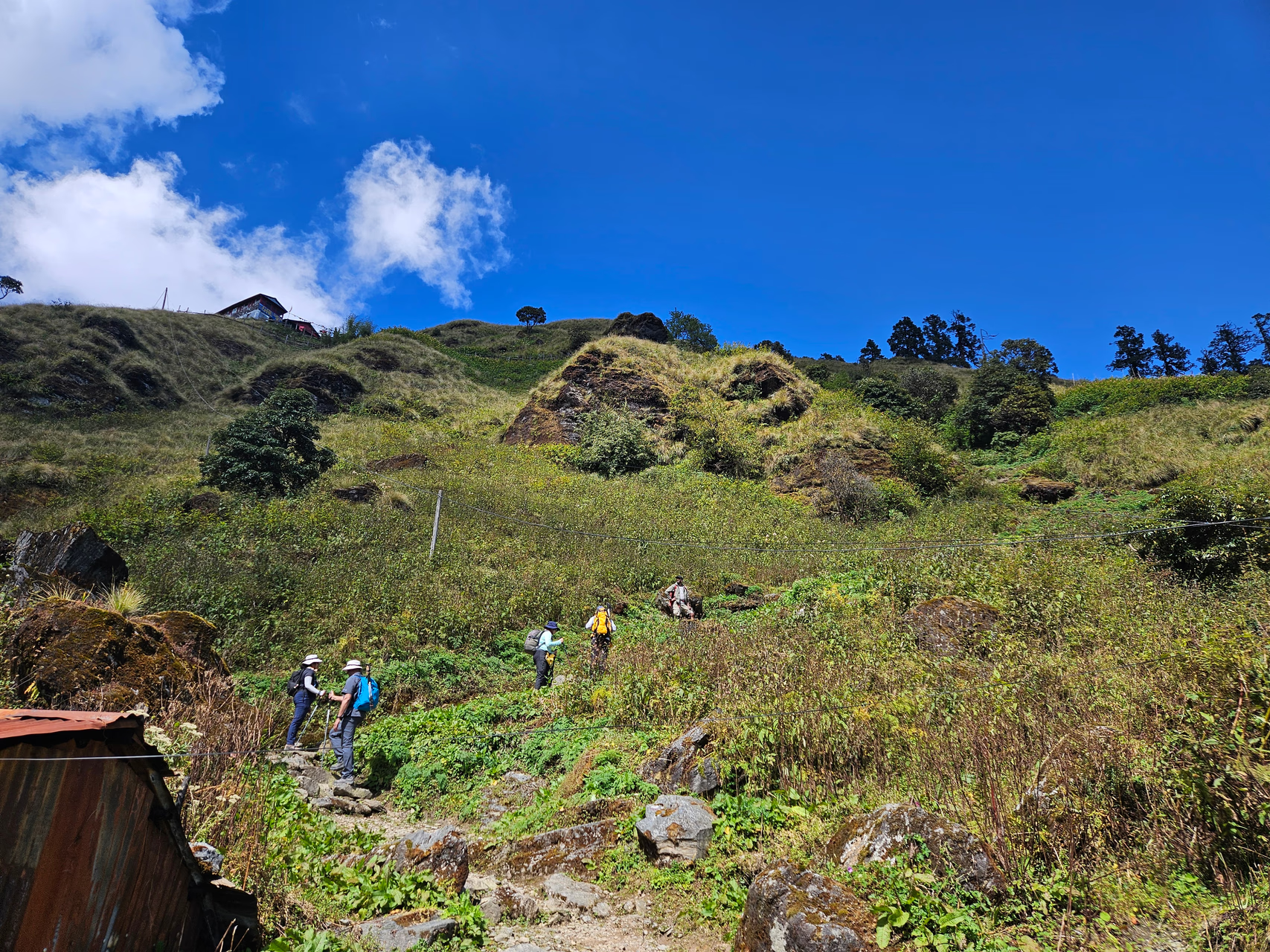 The approach to Isharu—where the trail stopped being polite and started getting real
Stone steps. Then more stone steps. Then, just to keep things interesting, additional stone steps. The path carved into the mountainside, gaining elevation with the kind of efficiency that feels hostile to human legs.
Lunch on a Ledge
Isharu Teahouse sits perched on what can only be described as an architectural dare. The building clings to a ledge with the confidence of something that has survived enough monsoons to earn its placement.
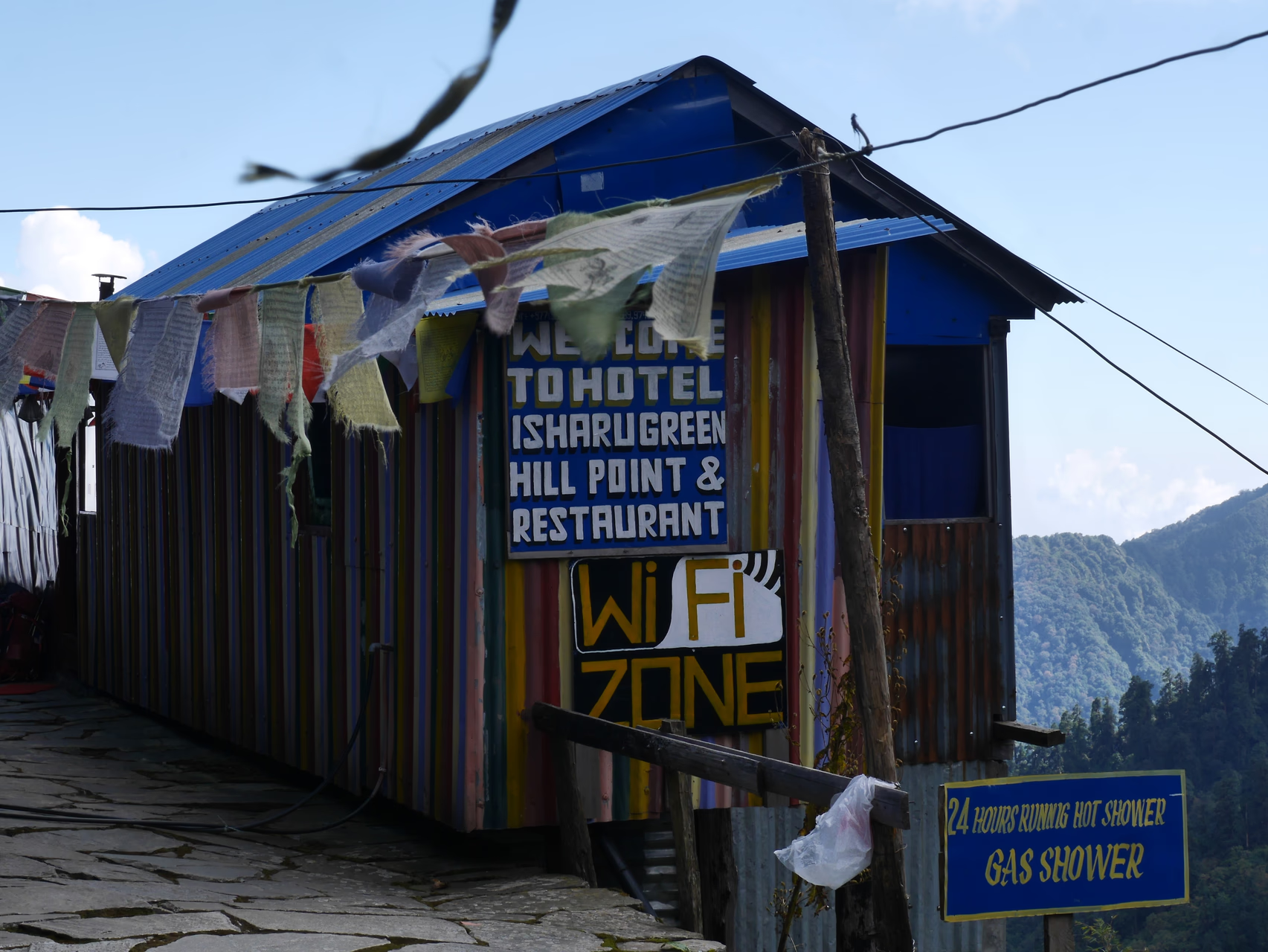 Isharu Teahouse—perched on a ledge like it had nowhere else to be
We reached it around 2:30 PM and collapsed into lunch mode. Dal bhat. The reliable mountain fuel. By this point in the trek, dal bhat stops being a meal choice and becomes simply “food.” You eat it because it works.
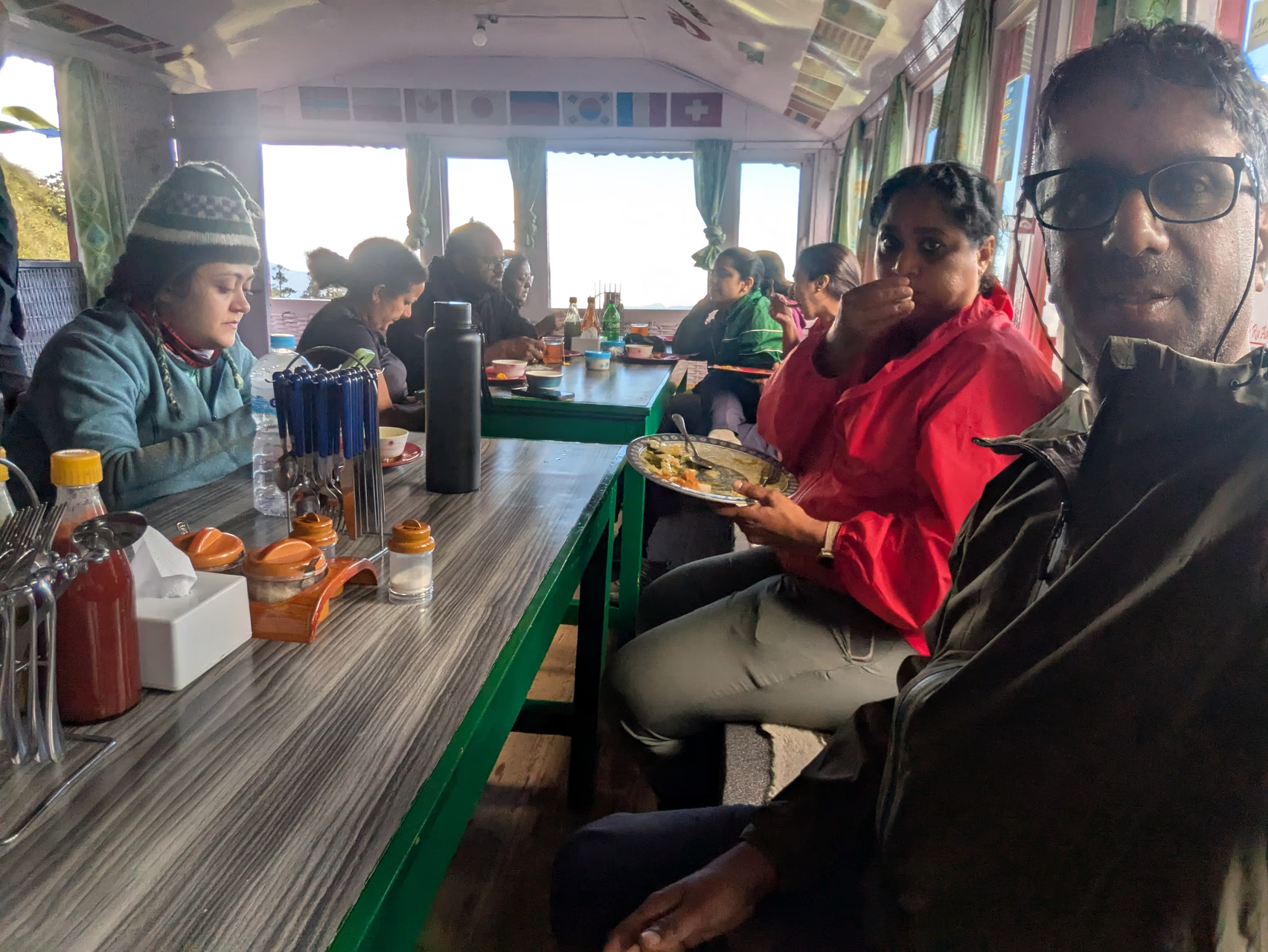 Dal bhat at Isharu—sustenance at elevation
The teahouse had a certain dramatic flair to it. Views that justified the climb. The kind of place where you sit and think about the engineering decisions—and the faith—required to build something this high on such little horizontal space.
Walking the Edge
After lunch, the trail continued along the mountain’s edge. Exposed sections. Ledges with drop-offs that demanded respect and careful foot placement. The kind of walking where you’re very aware of gravity’s standing invitation.
More stone steps. More altitude. The air starting to feel thinner in that way that’s psychological and physiological at once. Your breath works a little harder. Your heart rate climbs a little faster.
The Holy Site
We passed Kirumsi Barha—a sacred site where local tradition invites offerings to the deity. Not money. Not manufactured trinkets. Natural items. Leaves. Flowers. Stones. Things the mountain provides.
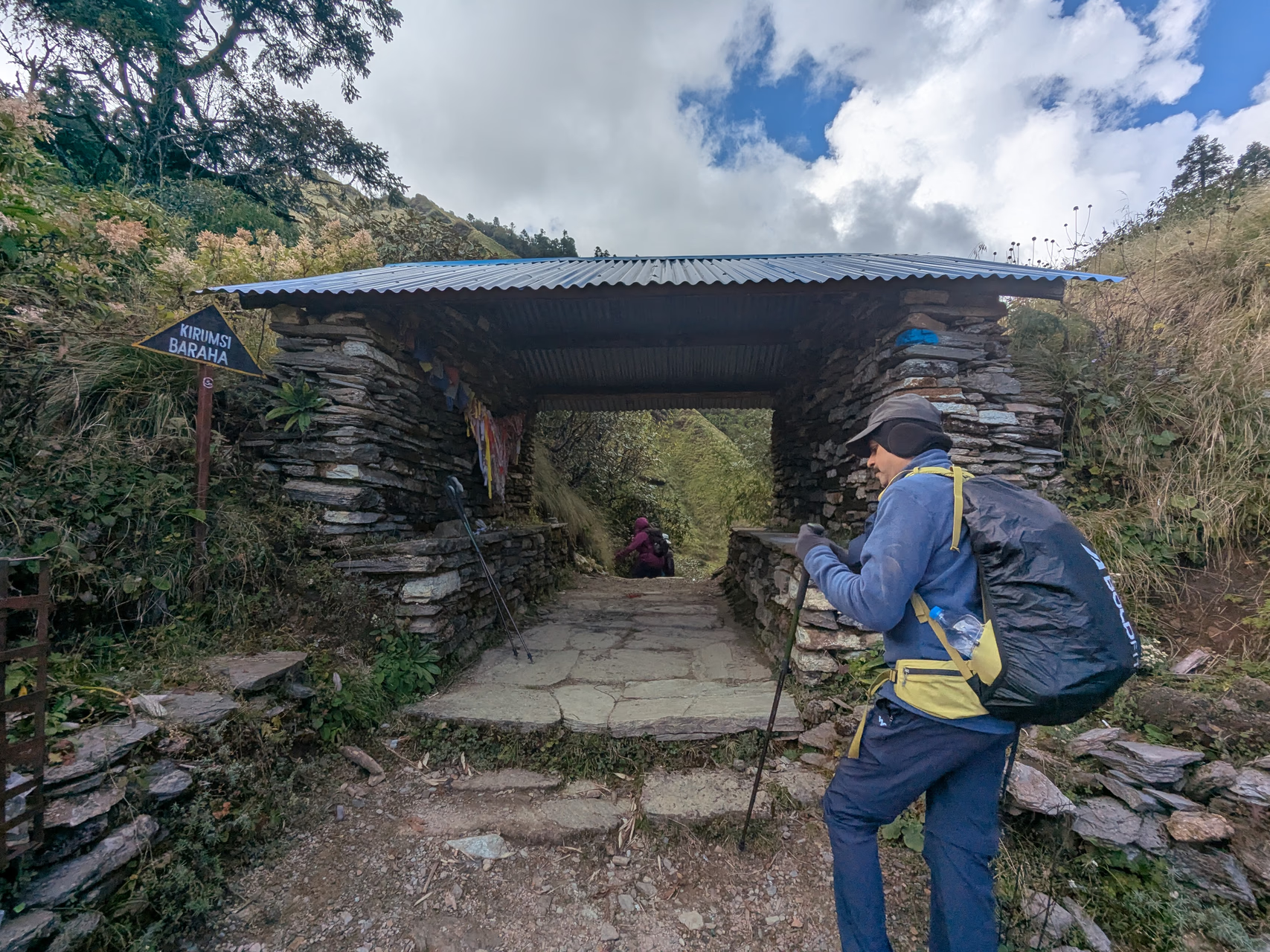 Kirumsi Barha—where the currency is natural and the exchange is spiritual
We each left something. A small acknowledgment of the mountain’s hospitality. When you’re walking trails this ancient, maintained by traditions this old, it feels appropriate to participate in the customs that outlast you.
Geology Lessons
The rocks along this section caught the eye—layered, sparkled with mica. Mineral-rich formations that split light into small shimmers. Praveen pointed out the mica content, explaining the geological story written in these stones.
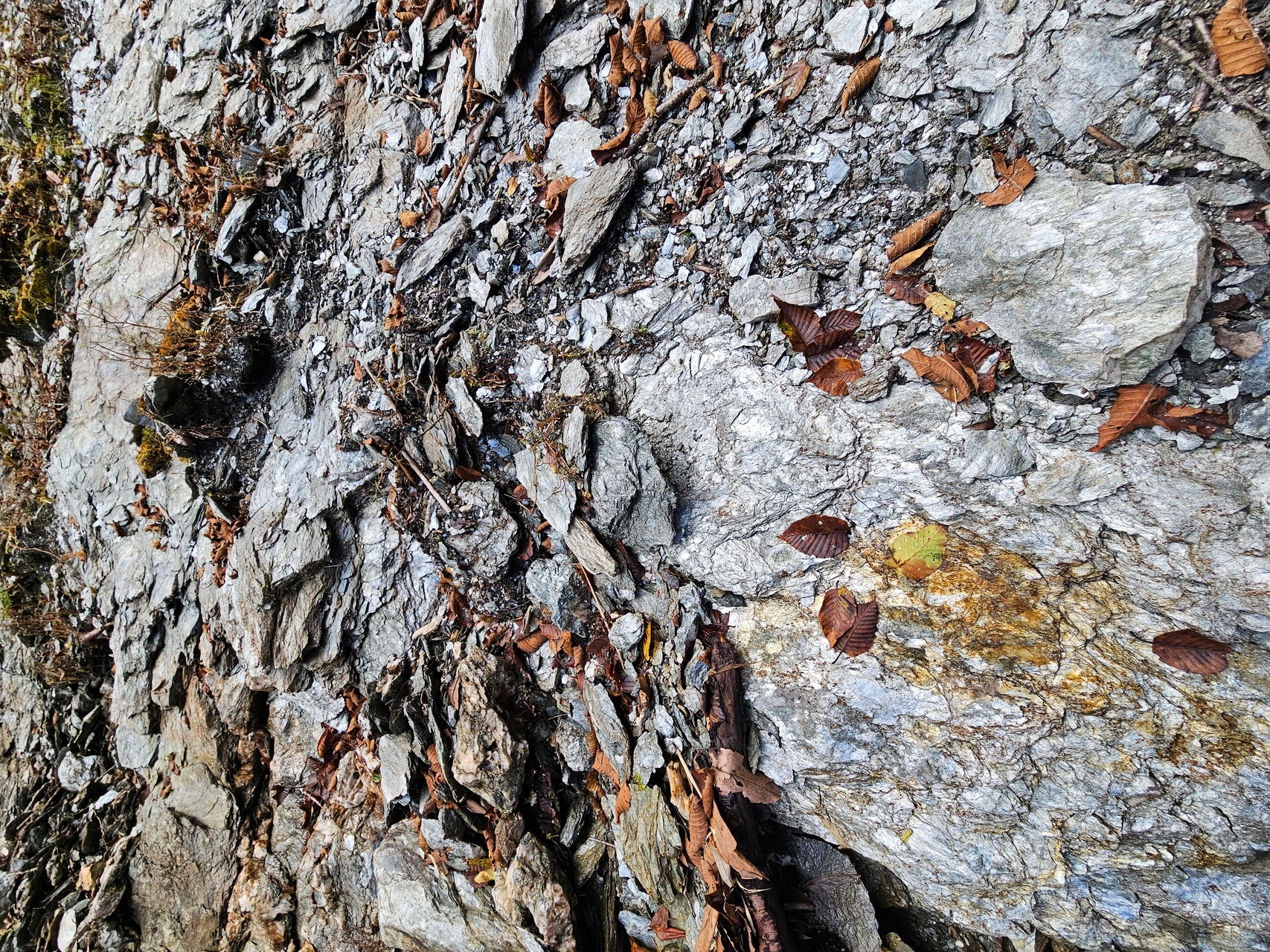 Mica-rich rocks sparkling in afternoon light—the mountain showing off its composition
Every mountain is a textbook if you know how to read it. Praveen was teaching us the vocabulary.
The Final Push
The last section to Dobato felt long. Not because of distance—because of accumulation. Eight hours of walking. 720 meters of elevation gain. The kind of tired that settles into your legs and starts writing poetry about rest.
We crossed streams. Navigated wet rocks. Placed feet carefully on sections where slipping would introduce unwanted vertical travel.
The final approach—3,350 meters and thoroughly tired
Pratibha walked in front. George and Simon keeping pace. Everyone in that end-of-day rhythm where conversation gives way to focused breathing.
Arrival
We reached Hotel Mount Lucky at Dobato around 4:30 PM. Relief. Exhaustion. The particular satisfaction of arriving somewhere after eight and a half hours of convincing your body to keep moving.
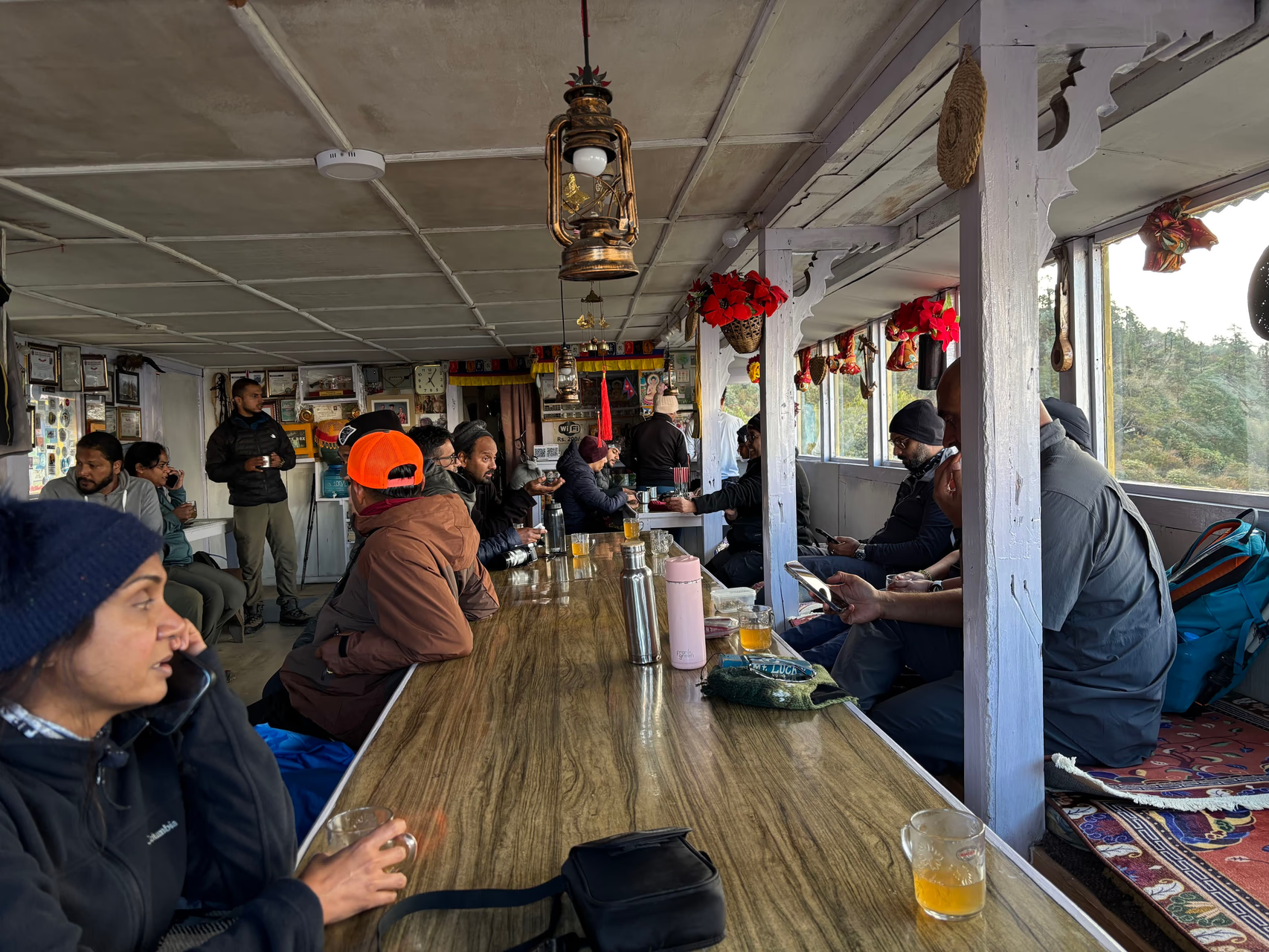 Arrival at Dobato—the look of people who earned their rest
The temperature was dropping fast. We gathered in the main hall, waiting for the rest of the group to arrive. The porters came in with the gear, carrying loads that would break most of us, making it look routine because for them, it is.
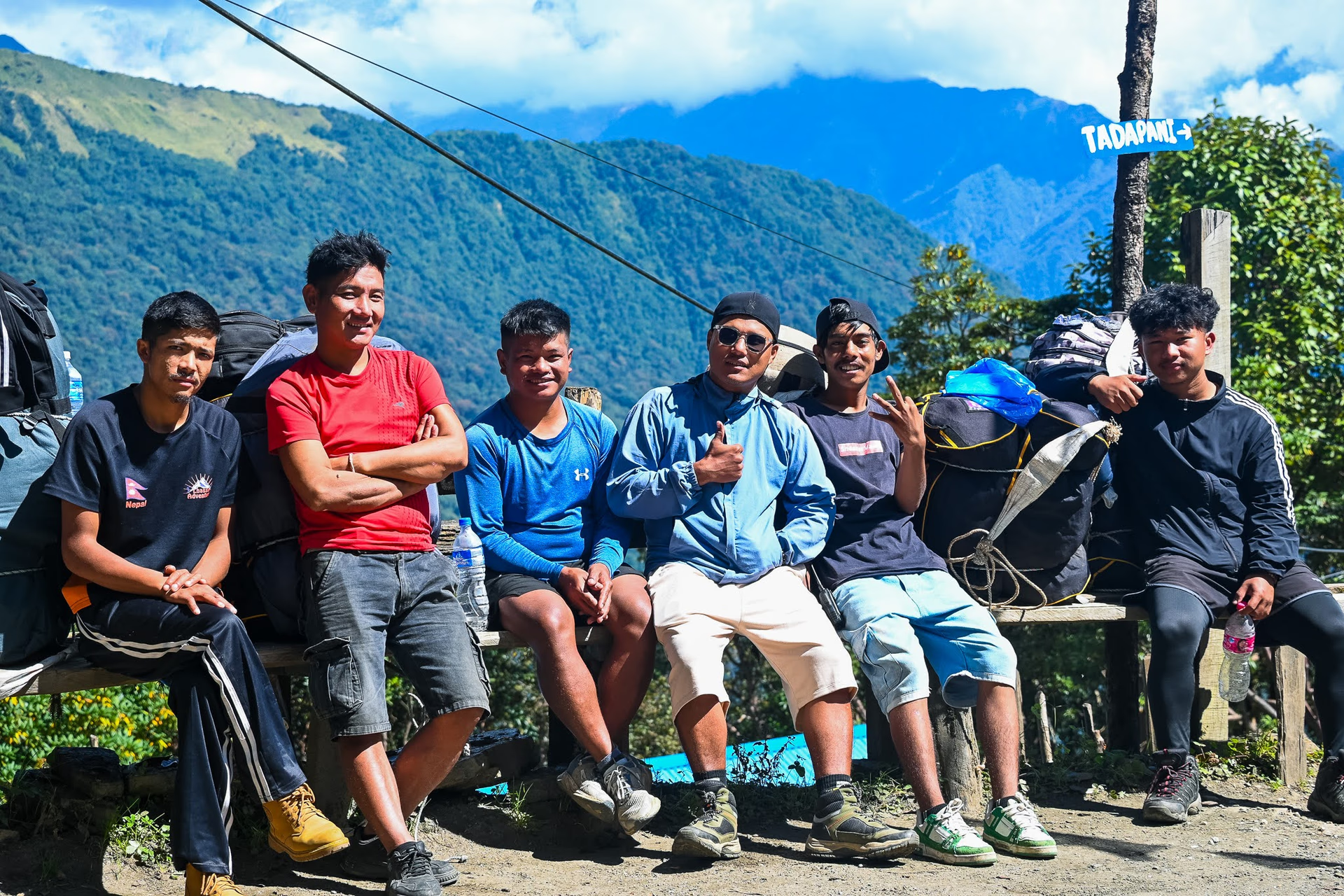 The porter team—carrying more than we could imagine with grace we couldn’t match
Altitude’s Accounting
Renjith Baby was showing mild signs of AMS—Acute Mountain Sickness. Nothing severe, but enough to remind us that 3,350 meters is an elevation where the body needs to renegotiate its relationship with oxygen.
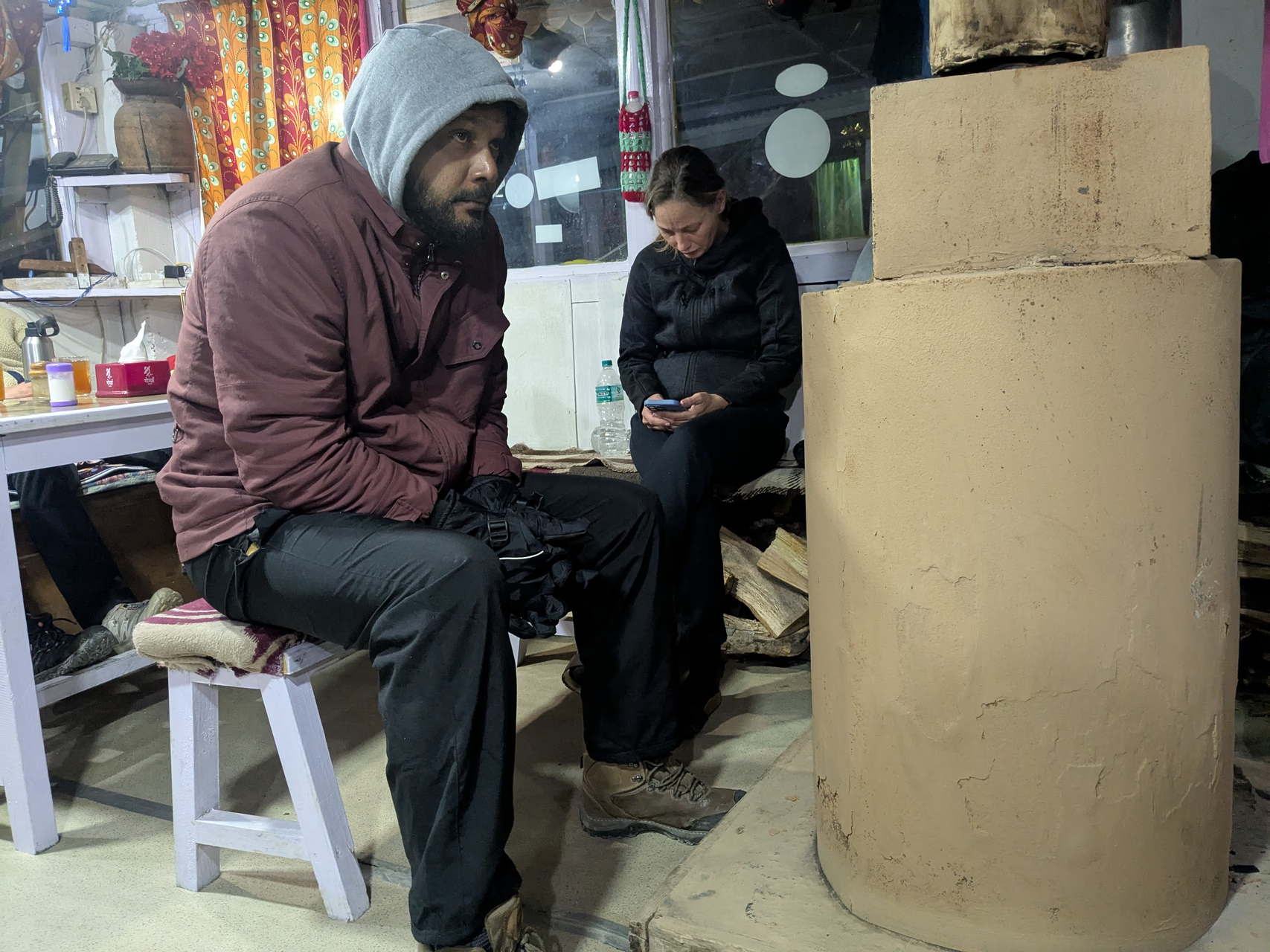 Renjith feeling the altitude—the mountain extracting its toll
This was our second trek as roommates—a partnership that had established certain rituals. One of those rituals involved Diamox, the altitude sickness prevention medication we’d both been taking daily since this trek began. We hadn’t used it on our first trek together, but at these altitudes, prevention seemed wiser than hope.
The pattern was consistent: Renjith would forget. Every day. Without fail.
It had become my solemn duty—half before the trek started each morning, half after dinner each evening—to remind him to take his dose. A job I’d performed with reasonable diligence so far.
Still, altitude has a way of reminding us who’s boss. No matter how prepared you are, no matter how religiously you take your medication, the mountain makes its own rules. The thin air doesn’t care about your pharmaceutical interventions. It demands respect on its own terms.
We monitored. Hydrated. Moved slowly. The altitude would either accept us or it wouldn’t. All we could do was give our bodies the time and resources to adapt.
The Cold Reality
Dobato was cold. Not metaphorically. Not “oh, it’s a bit chilly” cold. Actually, measurably, aggressively cold. The temperature was dropping toward -5°C, and the teahouse wasn’t equipped to argue with those numbers.
We gathered in the main hall for dinner. The usual Nepali fare. Warm food in a cold room—the mathematics working in our favor for exactly as long as we stayed near the kitchen.
Someone mentioned the wifi. We’d have to pay for it here, unlike other teahouses. Several people paid. The wifi worked for approximately five minutes before giving up entirely. Not even the internet wanted to function at this altitude.
Night at 3,350 Meters
The room was basic. Wooden walls. Thin blankets. The kind of accommodation that makes you realize how much modern life depends on insulation and heating systems.
I layered everything: thermal base layers, fleece, down jacket, beanie, balaclava. The goal was to create enough personal climate control to trick my body into sleep.
The water for washing was ice cold. Tried to use soap. It barely lathered. The cold made everything difficult—basic hygiene becomes an engineering challenge.
Eventually, exhaustion won over discomfort. Sleep arrived, carrying me through the coldest night of the trek so far.
Reflections
Day 4 was the day the trek stopped being a walk through beautiful places and started being a conversation with altitude. The mountain was teaching—through Praveen’s ecology lessons, through the thinning air, through the cold that settled into Dobato after sunset.
Every trek has a moment where it shifts from tourist experience to genuine engagement with the environment. For me, that shift happened today. The altitude made itself known. The cold made itself felt. The trail demanded respect in ways the earlier days hadn’t.
We were climbing higher tomorrow. The body would need to adapt. The mind would need to accept the new terms. The mountain would continue its curriculum.
But that’s tomorrow’s lesson.
The mountain teaches best through discomfort. The students who stay are the ones who pass.