
TKM College of Engineering, Class of 1996
The Long Road to Lakeside: Airports, Altitudes, and Adaptive Scheduling
Late night flights, terminal transfers, bureaucratic nightmares, and the delightful chaos of Kathmandu domestic aviation—where tickets are more suggestion than schedule
Pune → Pokhara (Hotel Dashain)
The Night Before the Mountains
Sometimes the journey matters more than the destination. Tonight was not one of those times—but it insisted on mattering anyway.
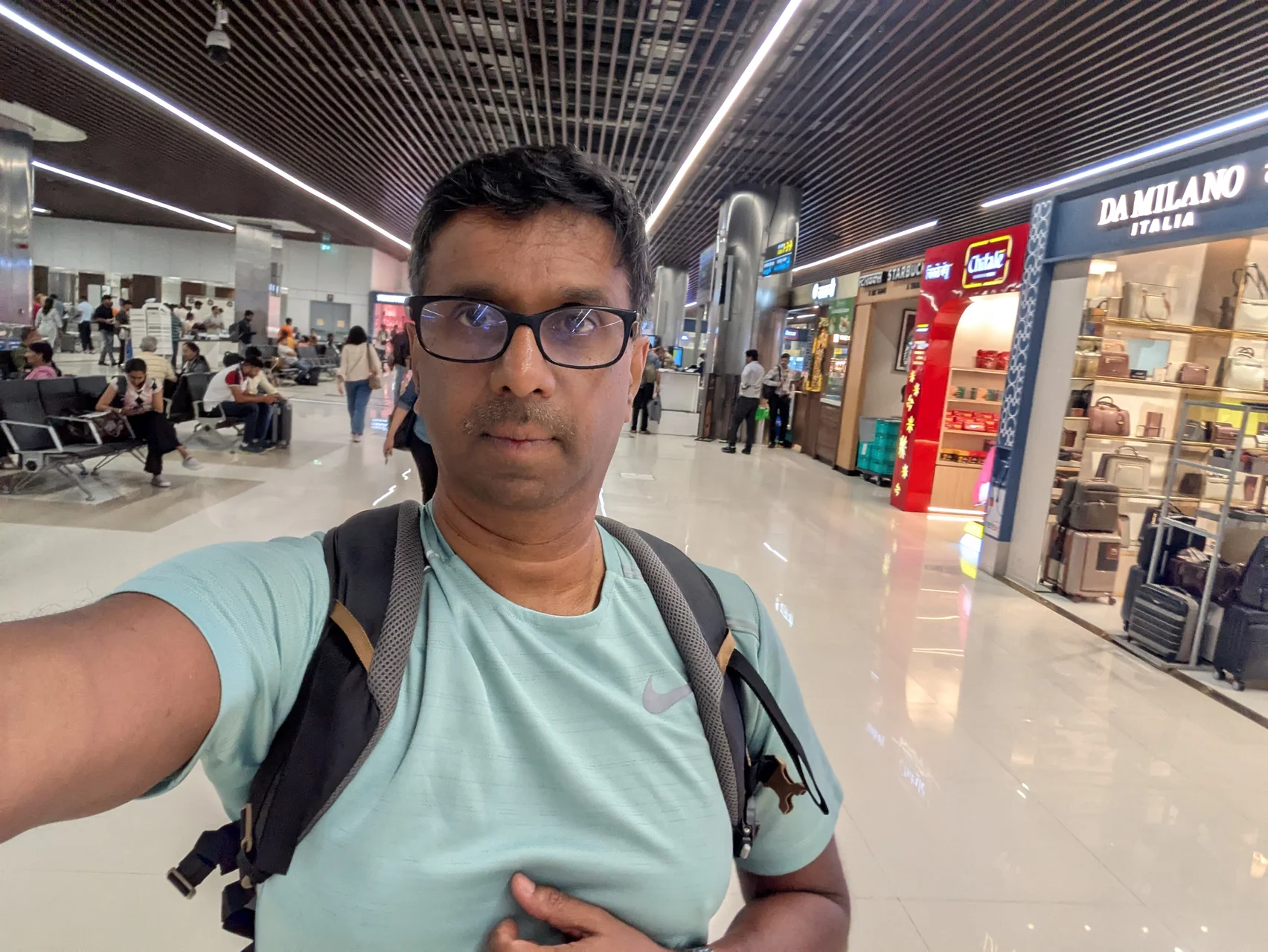 Pune Airport, late evening. The beginning of a very long night.
The late-night flight to Delhi was uneventful in that special way Indian domestic flights are uneventful—which is to say, it was cramped, slightly delayed, and filled with people who’ve made peace with the reality that aviation is just a bus with wings and altitude.
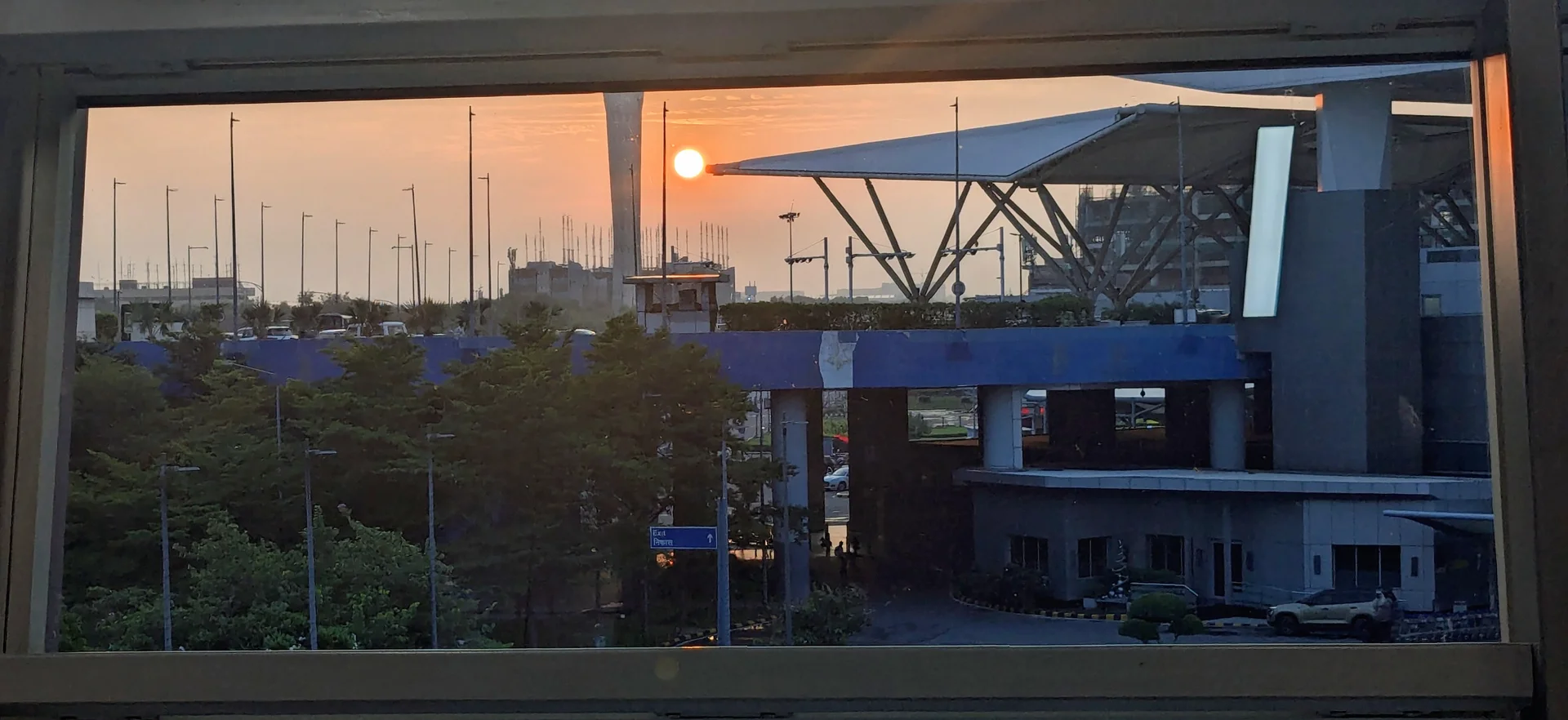 Sunrise view from Delhi Airport. The sky putting on a show before the bureaucracy begins.
Delhi: The Terminal Transfer Chronicles
Arriving in Delhi meant a terminal transfer. The free shuttle bus was there, dutifully ferrying sleep-deprived passengers between terminals in the pre-dawn hours. On the bus, I met another Indiahikes trekker heading to Himachal for a different trek. We exchanged that knowing look that trekkers give each other—the “we’re about to trade comfort for altitude” look.
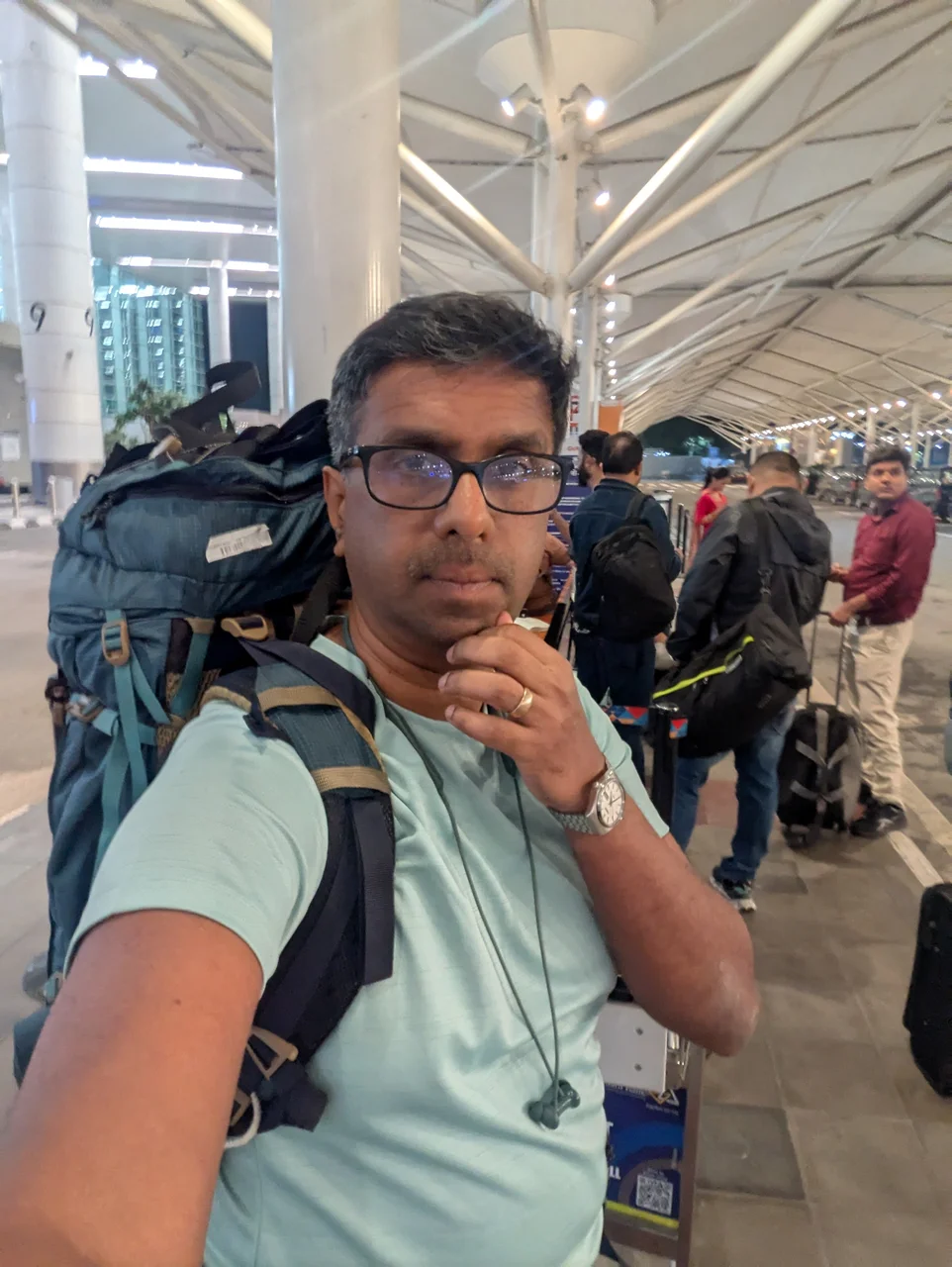 Terminal transfer at Delhi. Even airports sleep, apparently.
Then came the Delhi airport experience—that peculiar mix of high-tech infrastructure and Byzantine bureaucracy that India has perfected into an art form. The bag screening machines, despite their impressive appearance, seemed to work on the principle of selective functionality. “Please remove everything. No, everything. Yes, that too.”
The metal detector demanded I strip to near-nothing to pass through. I complied, having long since abandoned any illusions about airport dignity.
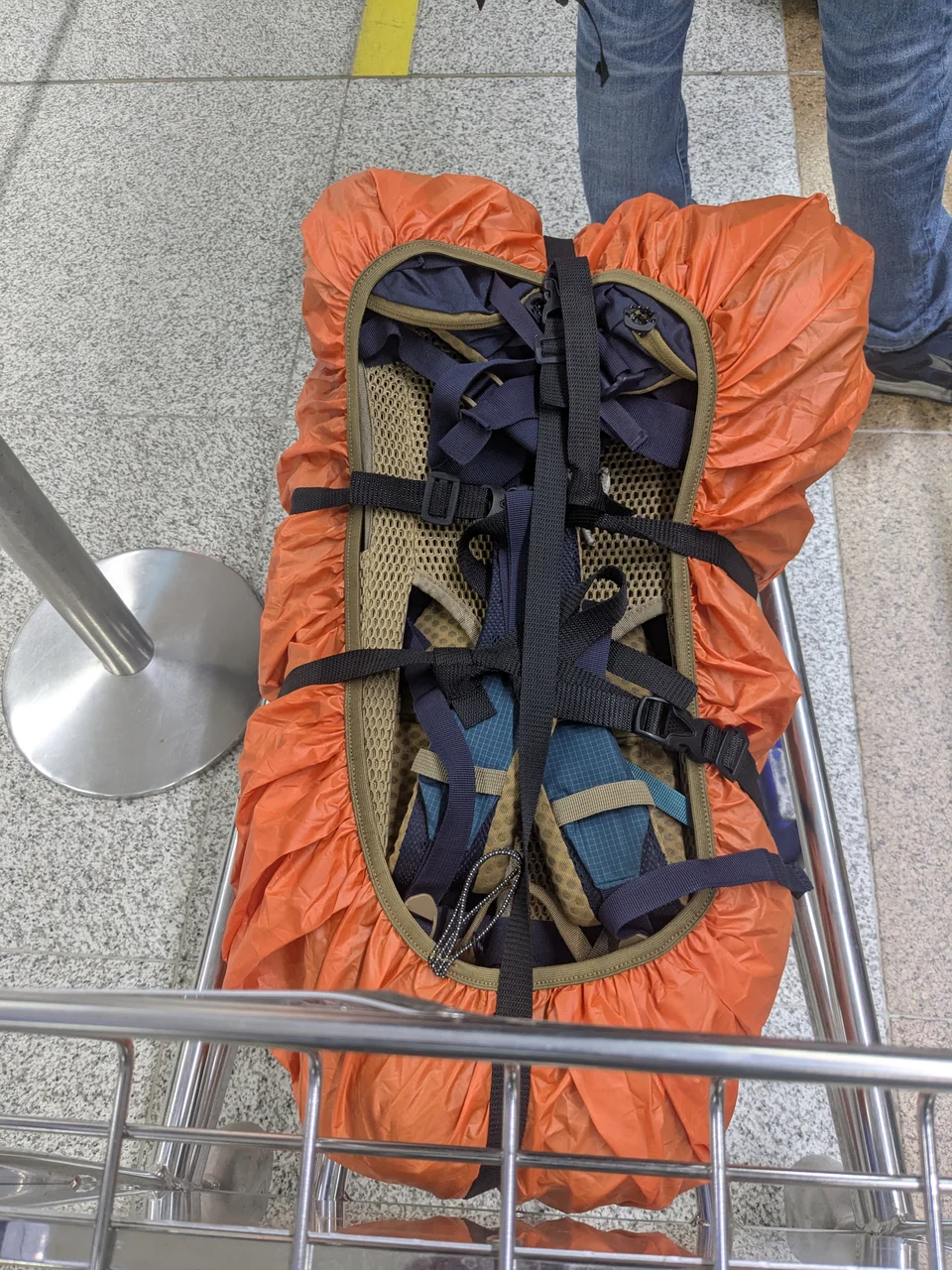 Backpack packed in its rain cover for extra protection, being checked in with a prayer.
The immigration officer stared at my non-passport identification with the suspicion typically reserved for people traveling with mysterious packages and nervous expressions. Indians don’t need passports to travel to Nepal—but try explaining that to someone who’s seen it all and believes none of it.
“You don’t have passport?”
“I do have a passport. I don’t need a passport for Nepal.”
She looked unconvinced. Time was moving, and my next flight wasn’t waiting for philosophical debates about travel documents. I produced the passport. She stamped it with what I can only describe as vindicated satisfaction. I moved on.
Kathmandu: Clear Skies and Circular Holding Patterns
The flight to Kathmandu was short and uneventful—or it would have been, if not for the tarmac inspection that delayed landing by an hour. We circled above Kathmandu for roughly the same duration as the actual flight time. Modern aviation: where you can spend as much time waiting to land as you did getting there.
But then the morning happened.
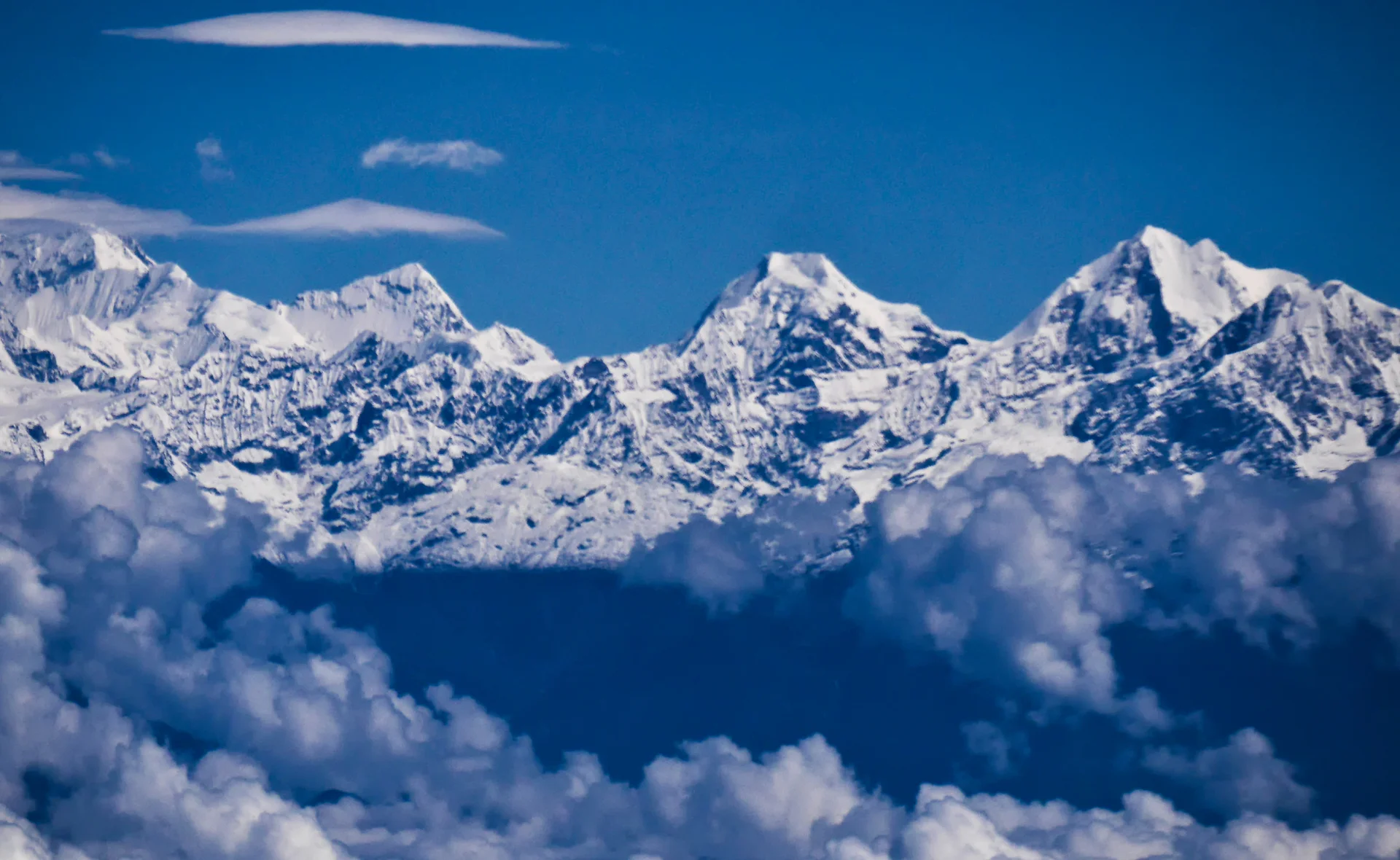 The Himalayas on a brilliantly clear morning. Worth every minute of circling.
It was brilliantly clear. From my window seat, the Himalayas spread out in all directions—white peaks against blue sky, arranged like some cosmic amphitheater. After a few minutes of just staring, I retrieved my camera and zoom lens from the bag and started clicking. The plane kept circling. I kept shooting. An excellent use of unexpected delay.
When we finally landed, Kathmandu airport was refreshingly efficient. Simple. Direct. I collected my backpack with surprising speed and exited into the Nepal morning. But the interesting parts of the journey were just beginning.
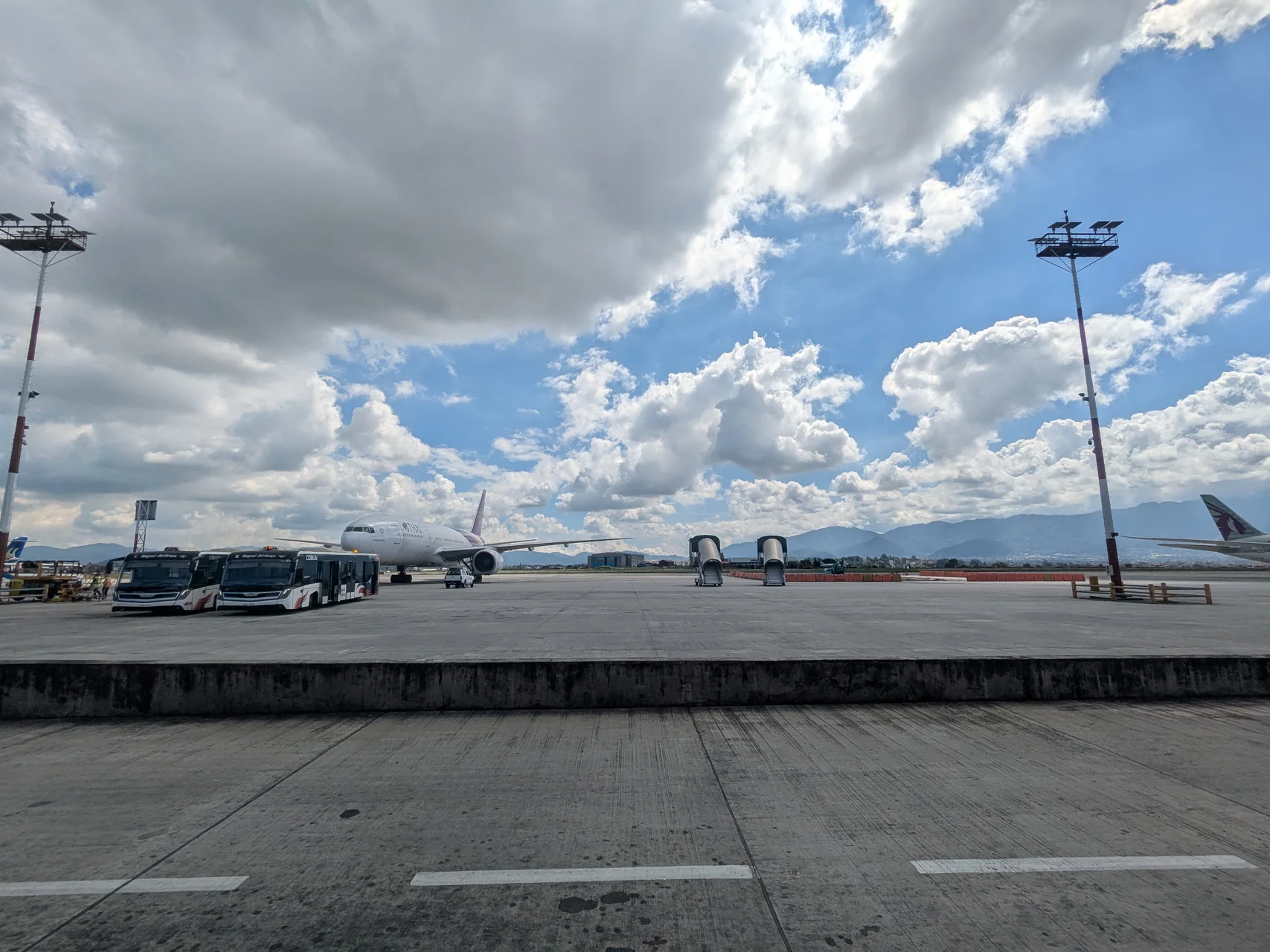 Kathmandu Airport. Efficient. Who knew?
The Domestic Terminal Discovery
Initially, I didn’t realize the domestic flight departed from a different terminal. After asking around and receiving directions that were more interpretive than specific, I started a 10-minute walk in the general direction of “over there.”
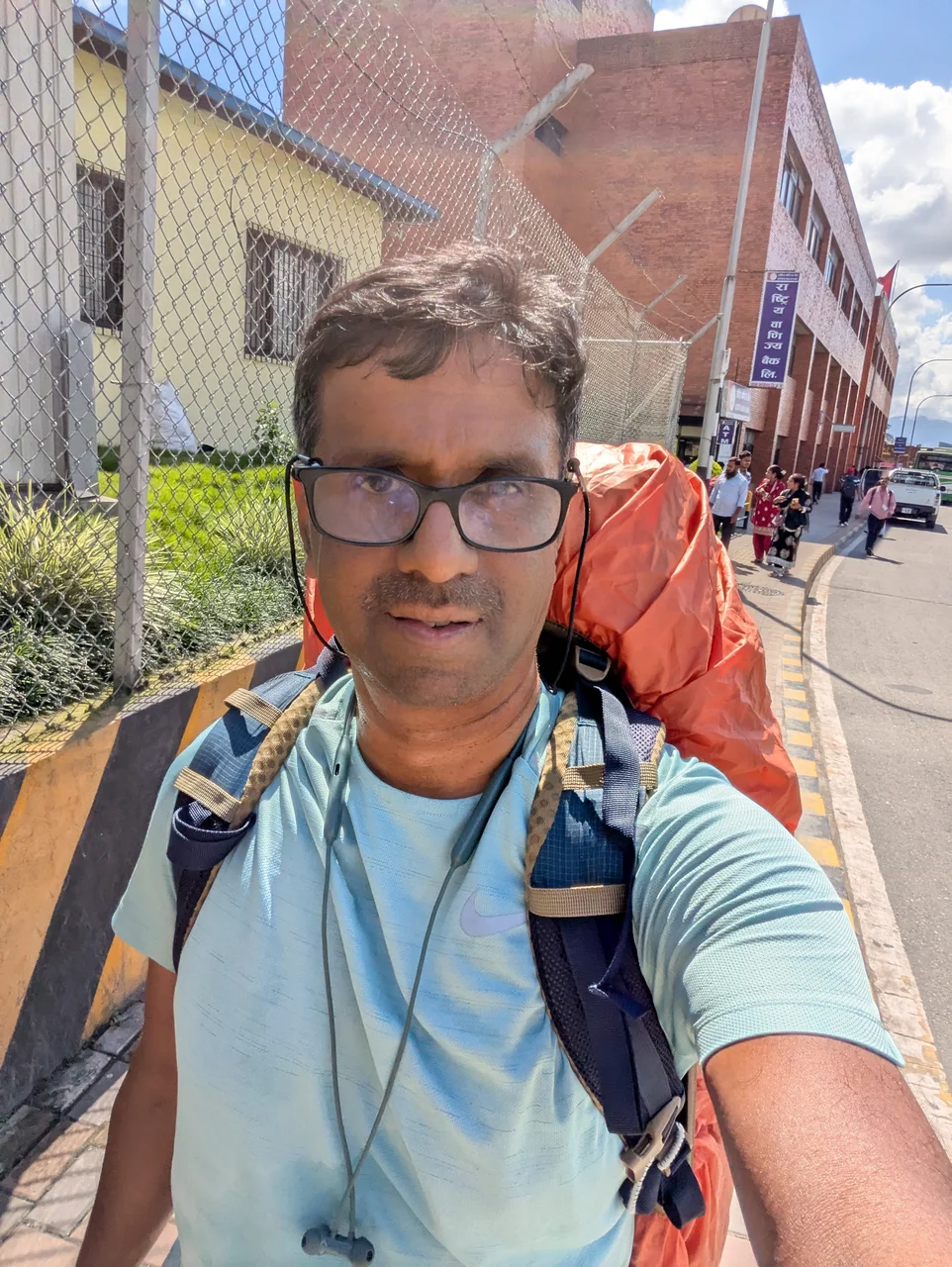 The walk to the domestic terminal. Following signs, hoping for the best.
I reached a building that looked remarkably like a bus stand. But the board clearly said “Domestic Departures,” so in I went.
Welcome to Nepal Aviation: Where Time is Merely a Suggestion
Inside was complete chaos.
Not the angry, stressed chaos of a delayed flight announcement. The peaceful, utterly unbothered chaos of people who know that flights in Nepal operate on Himalayan time—which is to say, whenever the weather and the planes decide to cooperate.
Kiosks lined one side. A sea of humanity occupied everything else. Hundreds of trekkers lounged on the floor, completely unhurried and at total peace. Some were reading books. Some were sleeping. Some were just… present. Without agenda.
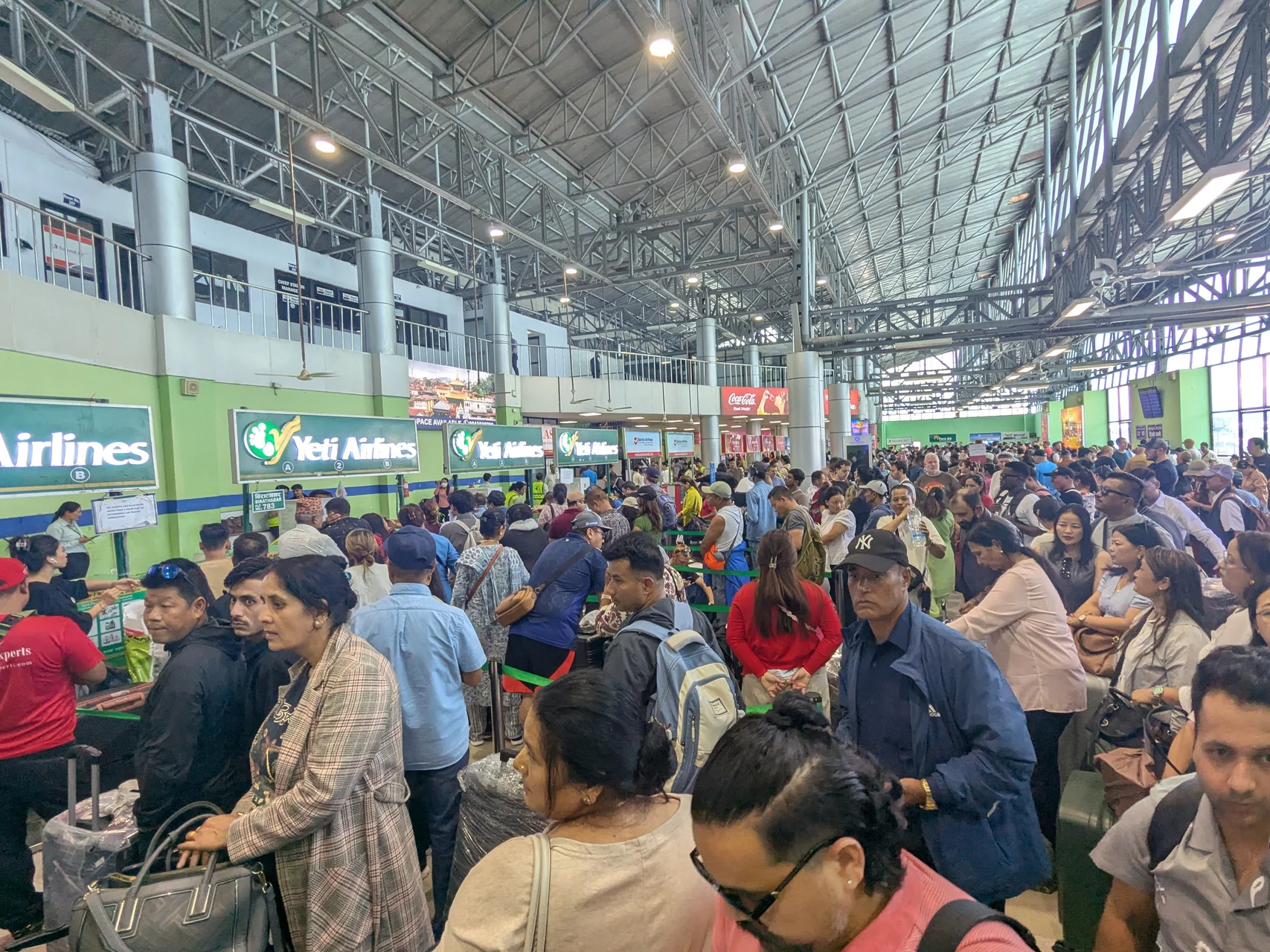 Inside Kathmandu Domestic. Equal parts airport and zen monastery.
Since I had no book and a flight to catch, I pushed my way to the Yeti Airlines counter and presented my ticket, eager to check in my backpack.
The lady at the counter stared at my ticket for a couple of seconds. Then she laughed. Out loud.
“You are too early,” she said. “Your flight is delayed by three hours.”
Of course it was.
I dumped my backpack by a pillar and sat down. Somehow, I felt absolutely certain that despite hundreds of humans milling about the terminal, my backpack would be perfectly safe unattended. So I went out to find food.
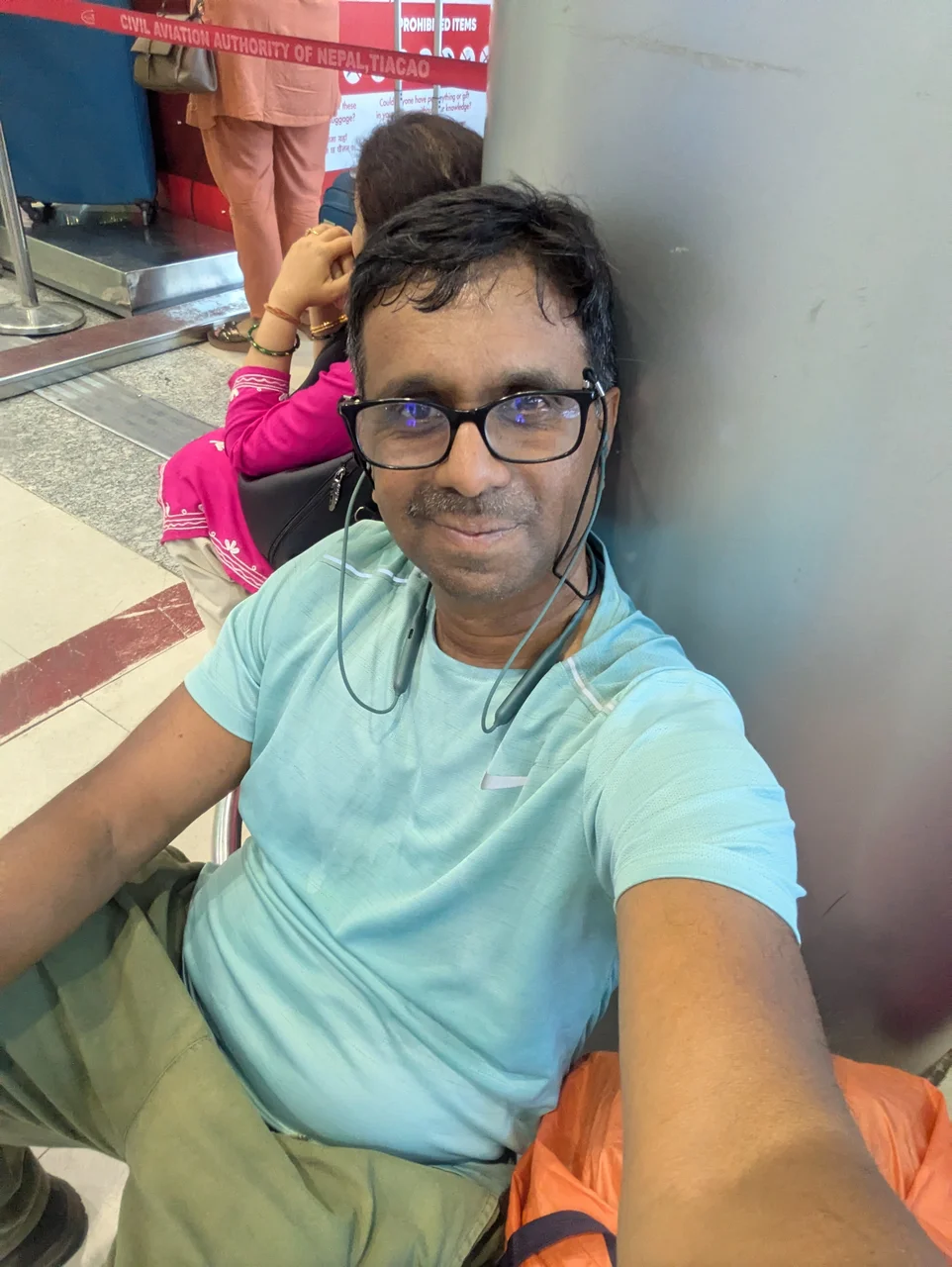 The domestic terminal from outside. Bus stand aesthetic, airport functionality.
Nepal Commerce 101: Where UPI is Universal
This was my first experience with Nepal commerce, and it was delightful.
Not only did my Indian currency work, but UPI—India’s ubiquitous phone payment system—also worked. I stood at a small restaurant, ordered food, and paid using UPI from my Indian bank account. In Nepal. The future is weird and wonderful.
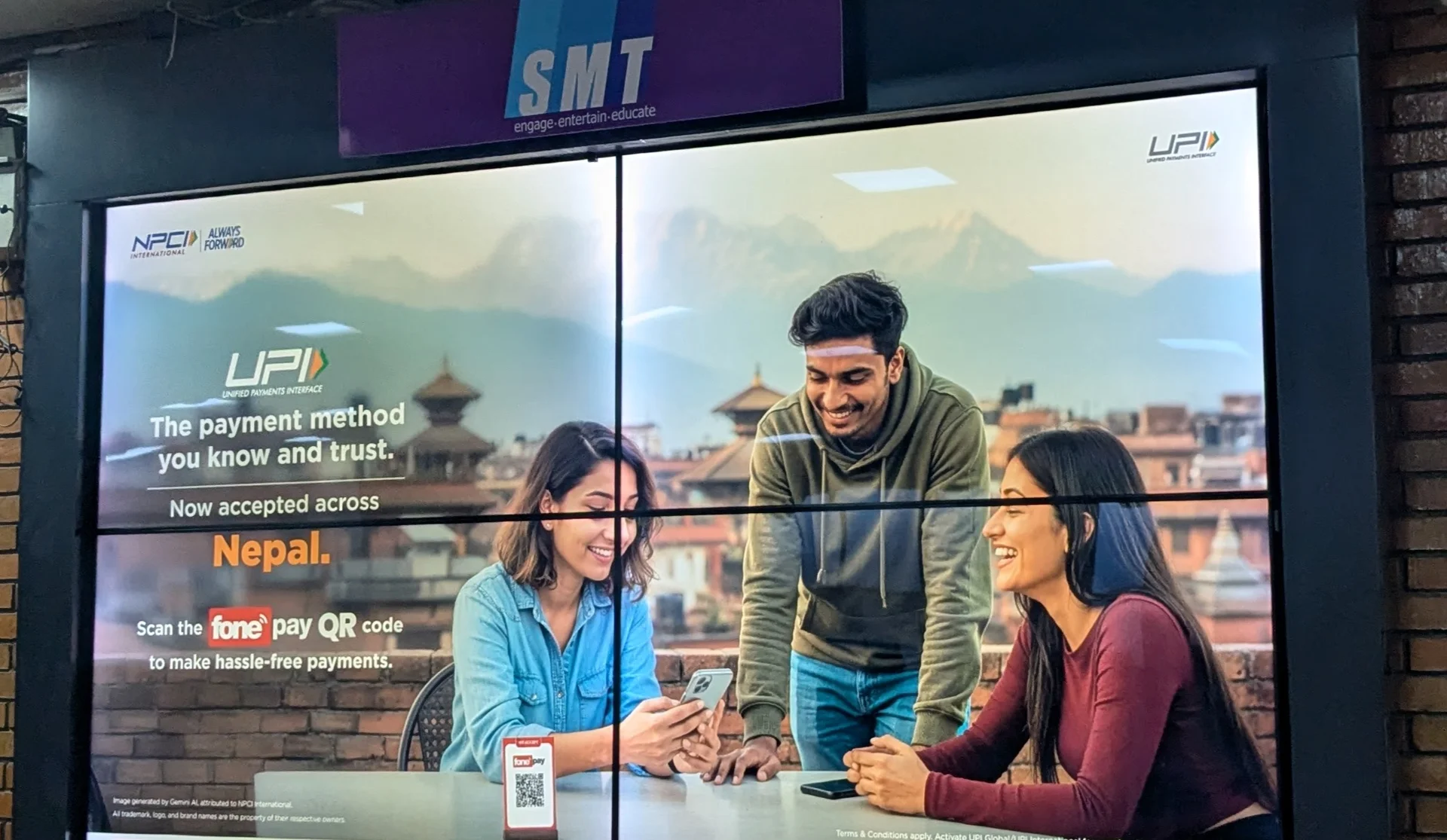 Paying for breakfast with UPI. Technology bridges borders better than diplomacy.
When I returned, my backpack was exactly where I left it. I sat down and waited ten more minutes. Then, on a hunch, I walked over to another Yeti counter and presented my ticket.
This time, different questions:
“How many people?” “One.”
“How many bags?” “One.”
She weighed my backpack, slapped a tag on it, and handed me a boarding pass. Not for my original flight—for some flight going toward Pokhara.
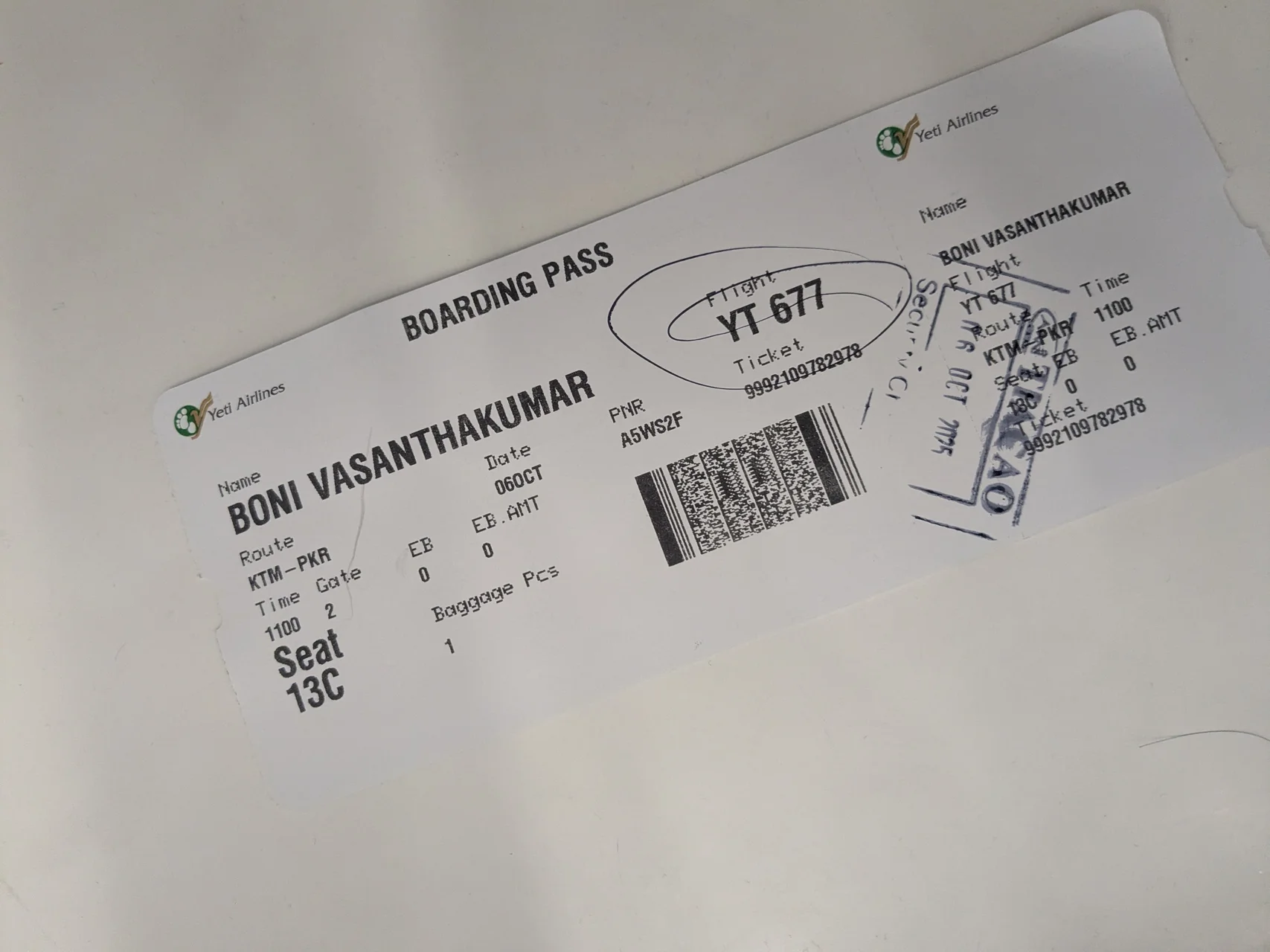 Boarding pass for “a flight to Pokhara.” Which flight? Yes.
This experience taught me a valuable lesson in Nepal domestic aviation: You have a ticket for the day. You can take any flight that day going to your destination. No assigned seats. No assigned flights. Just show up, get a seat on the next flight, and trust the process.
Within fifteen minutes, I was airborne.
Twenty-Five Minutes of Himalayan Glory
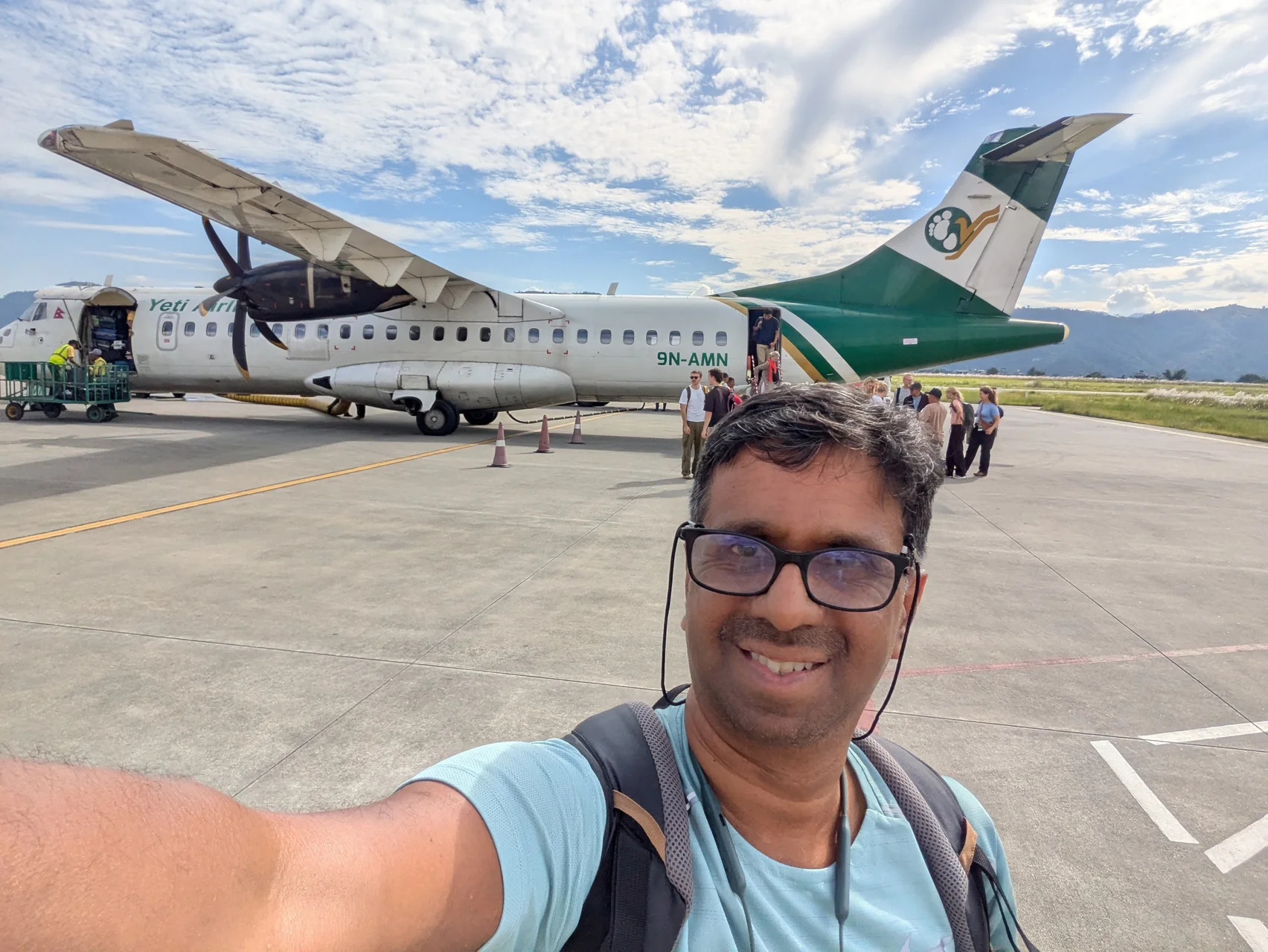 The flight to Pokhara. Short, spectacular, and exactly as advertised.
The flight to Pokhara was just twenty-five minutes. But what minutes they were.
 The Himalayas from 15,000 feet. Some views just stop conversation.
The Himalayas surrounded us completely. Every window framed a different composition of peaks, clouds, and morning light. I spent the entire flight with my face pressed to the window like a child at their first air show.
Pokhara: Money, Taxis, and Gen-Z Politics
At Pokhara airport, I exchanged Indian currency for Nepalese rupees at a booth right inside the terminal. The rate wasn’t great, but options were limited.
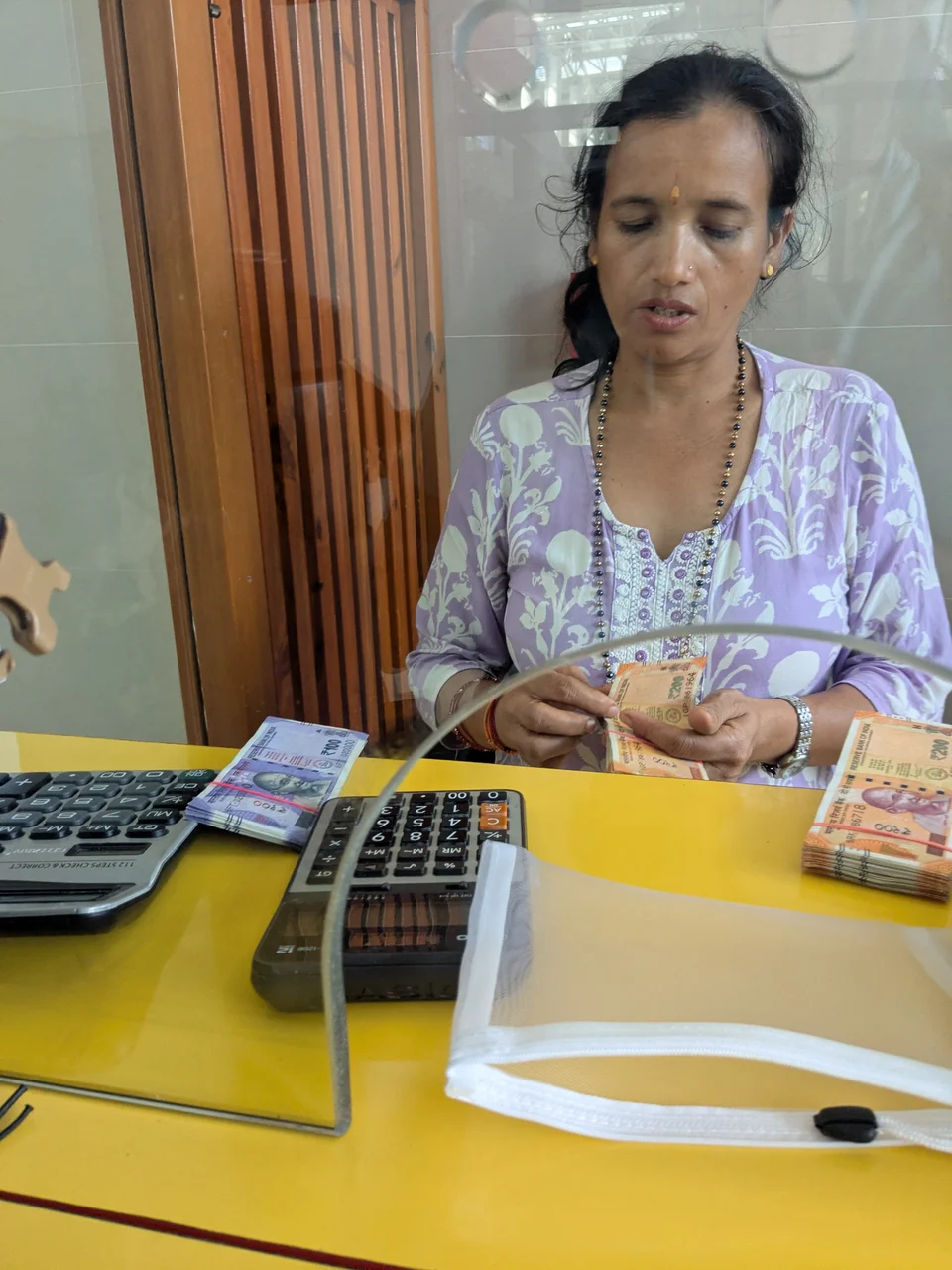 Currency exchange. The rate is what it is.
I collected my backpack, walked out to the parking lot, found a taxi, and haggled with the friendly driver. He loaded my pack into the boot, and we headed toward Lakeside—Pokhara’s tourist quarter.
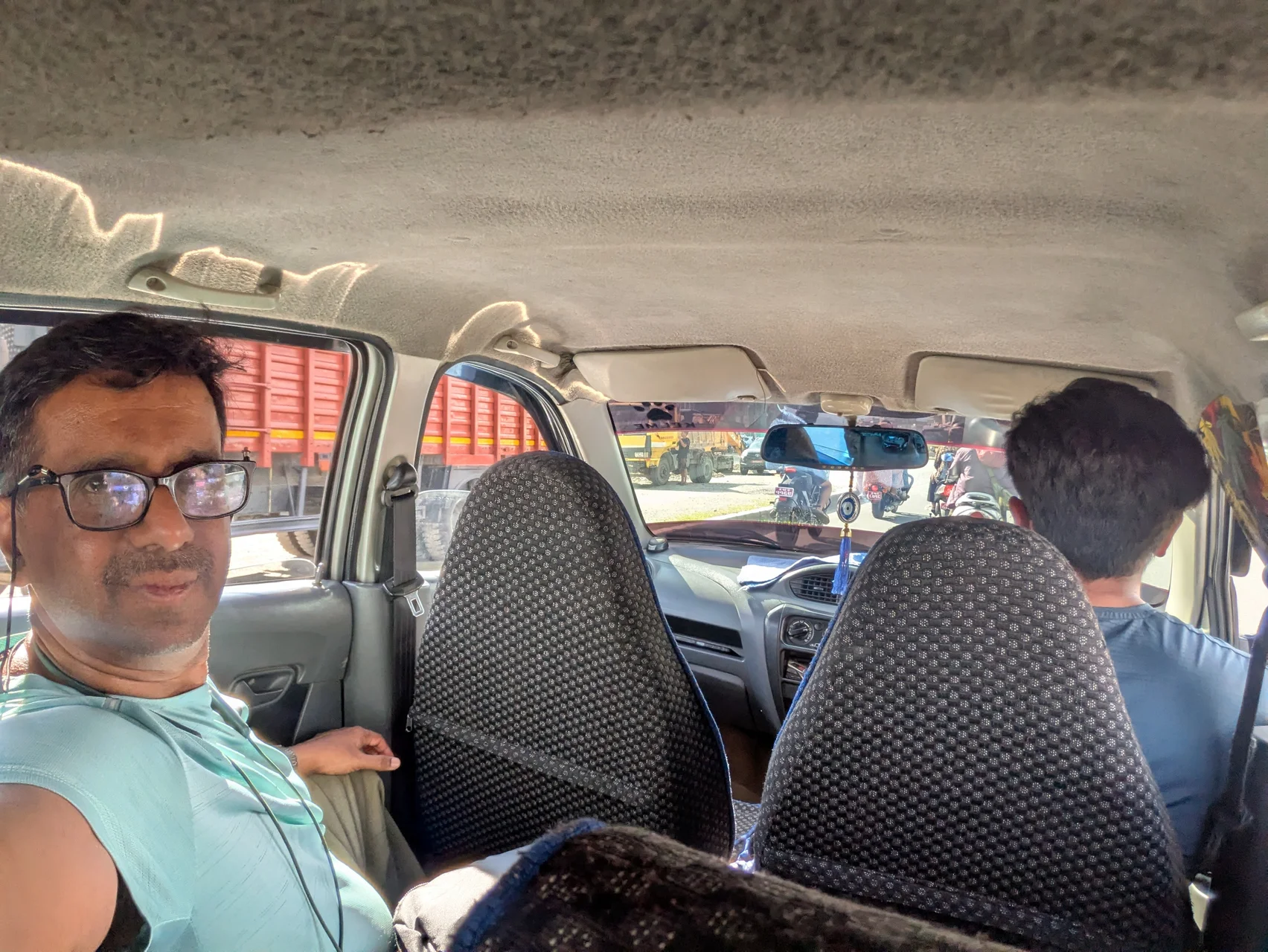 The drive to Lakeside. Where tourism and mountains meet.
During the drive, we talked. Young driver, Gen-Z energy, clear opinions about recent protests. In his view, the protests were necessary—his generation was proud of taking a stand against corruption. When I asked about the current government’s efficiency, he turned apprehensive. Shows how badly earlier politicians had zinged the common trust.
We reached Hotel Dashain in thirty minutes. Simple, clean, comfortable. Friendly staff. After a quick shower, I went out to explore.
Lakeside: Where Trekkers Come to Rest
Lakeside sits by Phewa Lake—a long stretch of shops, restaurants, and cafes with a decidedly laid-back vibe. I walked around, explored some shops, and had a late lunch at a small restaurant.
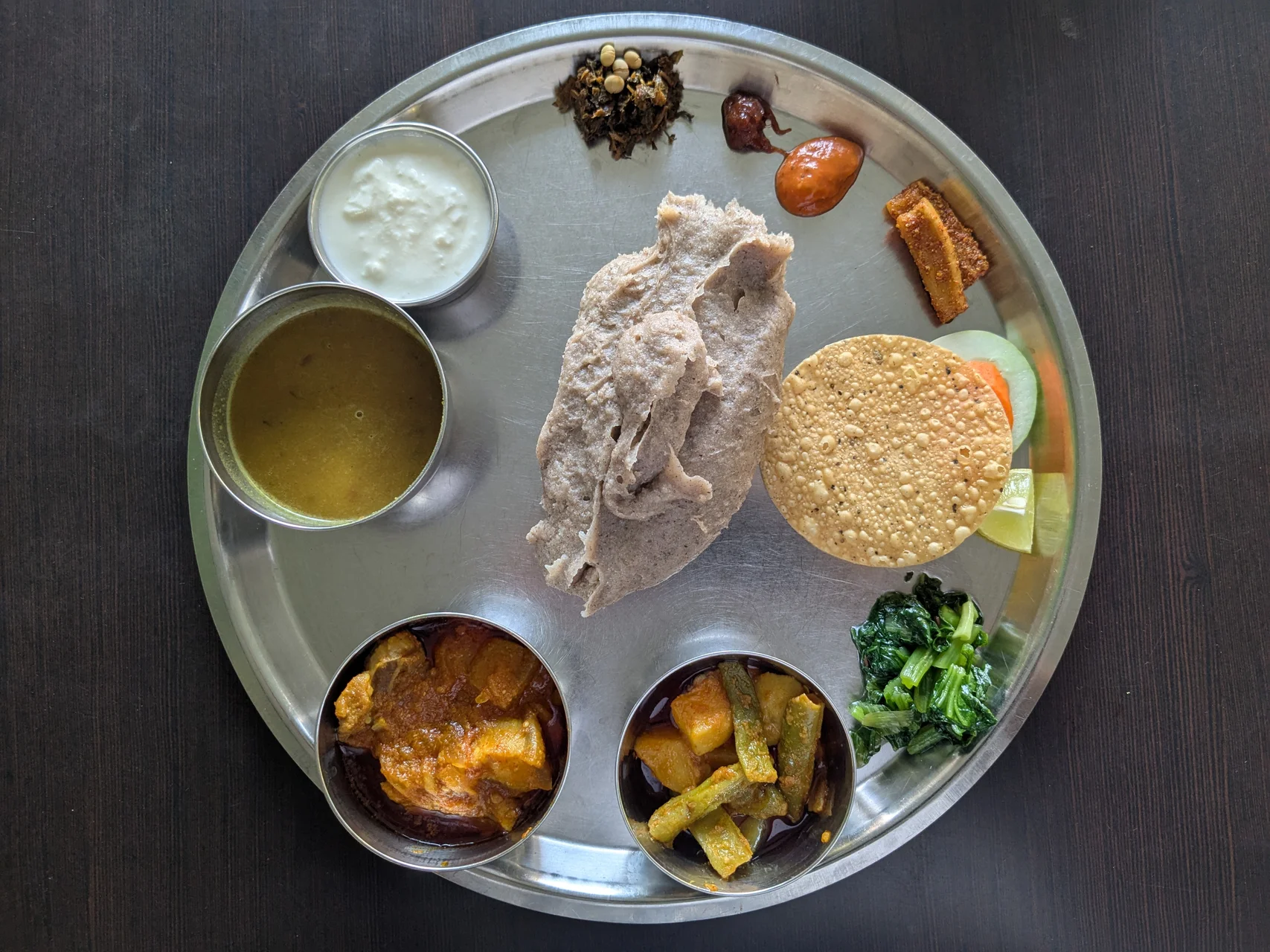 Dhido thali—a Thakali meal. The dhido (millet porridge in the middle) with meat curry and all the accompaniments. First proper Nepali meal.
The food was excellent and reasonably priced. After lunch, I walked down to the lakeside itself. The view—lake with mountains as backdrop—was exactly what postcards promise and rarely deliver. I sat for a while, just soaking it in.
Evening: Timuri Chicken and Cultural Programs
In the evening, I walked along Lakeside again and noticed a cultural program starting at a restaurant.
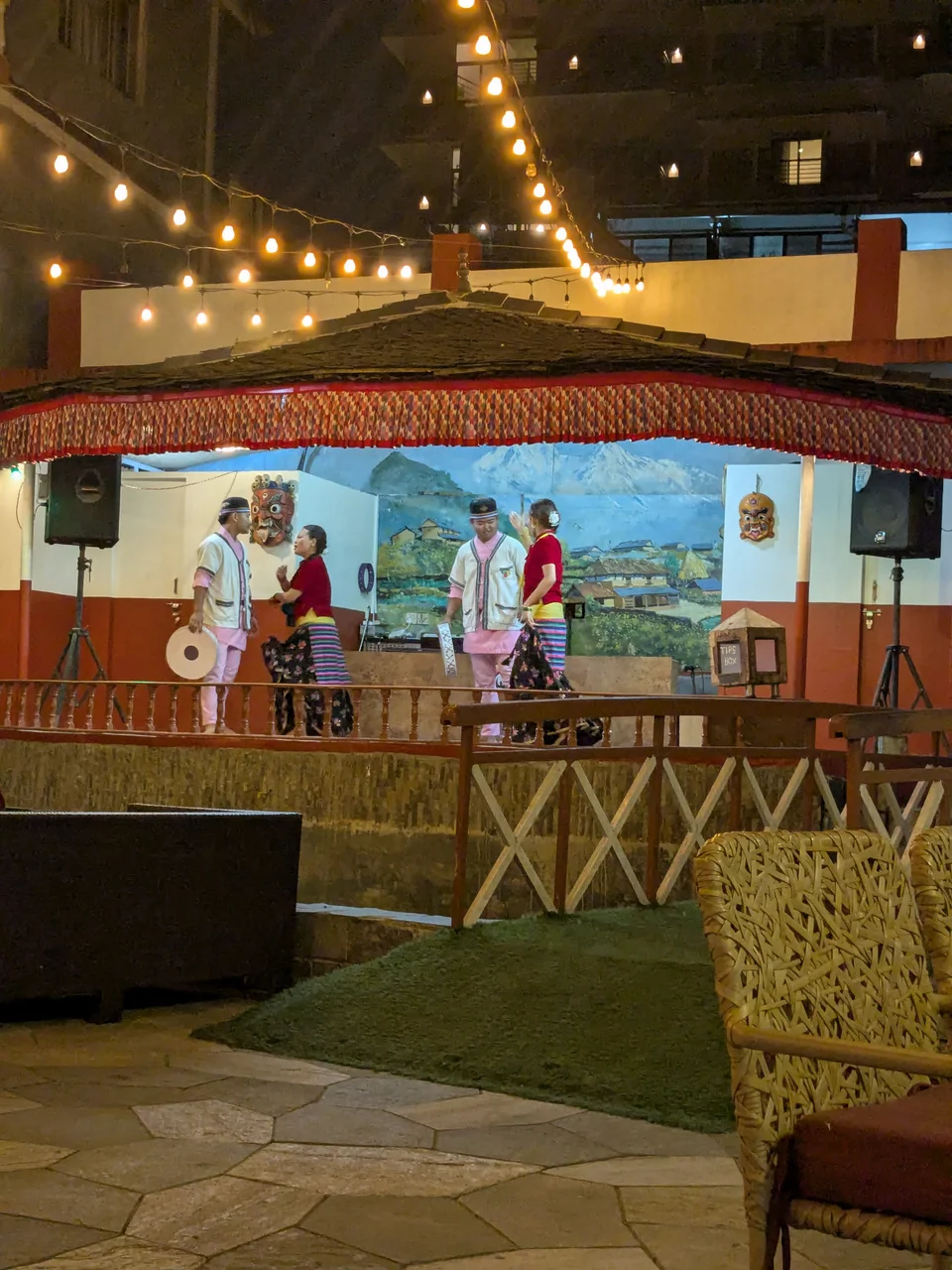 Evening cultural program by the lake. Traditional music, dance, and that perfect Nepal evening breeze.
I wasn’t particularly hungry, but I went in anyway. Asked the manager for a food recommendation. He suggested Timuri Chicken—a local dish.
 Timuri Chicken. The pepper had a distinct citric flavor—unfamiliar and excellent.
The dish had a unique pepper with a distinct citric flavor. The chicken was cooked well, spices balanced perfectly. Overall: delightful.
The cultural program was fabulous. The weather was perfect. Cool breeze from the lake. Mountains in the distance, turning purple in the fading light.
Overall: a great first day in Pokhara.
Waiting for Renjith
Renjith hadn’t reached yet. He was supposed to arrive in the afternoon. Knowing the unreliability of Nepal domestic flights, I wasn’t surprised.
I messaged him about my arrival and hotel details. He replied that he was still in Kathmandu, waiting for the next flight. He reached Pokhara late that night.
Tomorrow: the rest of the group arrives, and we get our first proper briefing about the trek ahead.
But tonight: just the lake, the mountains, and the quiet knowledge that we’re finally here.
Sometimes the journey is exactly as complicated as it needs to be to make you appreciate the arrival.